
Friday, May 22, 2026
27.9 C
Bengaluru

Gen Z Healthcare: Review of the Decoding Gen Z Report

Gen Z is not waiting to get sick. But are we overestimating their self-care literacyโ€”and underestimating their contradictions? Review of the Decoding Gen Z Report by Pharmarack

The original IPM Diaries presentation makes a compelling case: Gen Z (born roughly 1997 to 2012), now comprising about 26 per cent of Indiaโ€™s population, is shifting healthcare from reactive, doctor-led episodes to proactive, demand-driven, continuous wellness management. Therapies like dermatology, ophthalmology, gastroenterology, and sexual wellness are seeing disproportionate growth, driven by screen time, appearance consciousness, stress, and digital-native behaviors.

But is the full picture this linear? A critical review of recent Indian and international dataโ€”from Burson, Simon-Kucher, ICICI Lombard-Kantar, McKinsey, Deloitte, and IQVIAโ€”reveals a more nuanced, actionable reality for pharma leaders.

Validationโ€”The Shift Is Real and Quantifiable

Let us start with what the data confirms.

Proactive Mental and Physical Health Are Non-Negotiable

The Burson report, Gen Z: Calling for Healthcare Connection and Change (2025), found that 67 percent of Indian Gen Z prioritize physical health more than before, and 63 percent say the same for mental healthโ€”a direct validation of the original deckโ€™s Health and Wellness First claim.

However, there is a twist: 78 percent of Indian Gen Z report feeling positive emotions when actively participating in healthcare decisions. This isnโ€™t just compliance; it is empowerment as therapy. Pharma needs to treat engagement not merely as a marketing funnel, but as a core value proposition.

AI and Digital Are Not Nice-to-Haveโ€”They Are the Default

The Simon-Kucher and AESGP Better Health Report 2025, which surveyed over 2,700 European consumers, found that 81 percent of 18-to-28-year-olds use AI to guide health decisions, compared to 55 percent of the overall population. Indian data mirrors this digital dependency: the ET-Snapchat Gen Z Index (Q3 2025, n=741) found that 68 percent say health and fitness are top priorities, and fitness influencers are nearly as trusted as doctors for health information.

Critical nuance: Despite their digital fluency, 66 percent of Indian Gen Z still prefer in-person consultations according to Burson, and 77 percent trust doctors. This means omnichannel isnโ€™t optional; it is the only strategy that works.

Therapy Shifts: Dermatology, Ophthalmology, Anti-Obesity Lead

A Business Standard May 2026 analysis, citing Pharmarack VP Sheetal Sapale, confirms that Gen Z accounts for greater than a 25 percent share in dermatology and respiratory drugs. Key drivers include:

  • Ophthalmology: Higher screen time leads to dry eye and strain.
  • Anti-obesity: Quick appearance fixes and social media beauty standards.
  • Gastrointestinal: Food-delivery-driven infections and junk-food diets.

This data directly aligns with the original deckโ€™s therapy clusters.

The Contradictionsโ€”Where the Original Deck Underplays Risk

The original presentation is highly optimistic about Gen Zโ€™s proactive stance. However, recent Indian data reveal serious structural cracks in this narrative.

The Wellness Paradox: High Awareness, Low Preventive Action

The ICICI Lombard-Kantar India Wellness Index 2025 (n=2,063 across 19 cities) found a startling trend: Gen Z reported declines across all six wellness pillarsโ€”physical, mental, financial, social, family, and workplaceโ€”over the previous year.

Why? The study points to:

  • Workplace pressure: 73 percent believe high-pressure environments impact heart health, yet 40 percent frequently ignore symptoms, dismissing them as mere stress.
  • Diet inconsistency: 66 percent claim to eat a balanced diet, but execution collapses due to lack of time and motivation.
  • Future chronic risk: 17 percent of Indians now report diabetes, with millennials and corporate employees currently most affected.

The implication: Gen Z is on the exact same trajectory. While they know what to do, they struggle with execution. This is not a demand-generation problem; it is a habit-formation and adherence gap. Pharma can win by moving from episodic treatment to continuous, low-friction engagement through subscription-based nutraceuticals or app-based symptom tracking with behavioral nudges.

The Preventive Care Gap: They Do Not Come for Annual Checkups

A McKinsey report cited by CK Birla Hospitalโ€™s Dr. Manisha Arora reveals that only about 47 percent of Gen Z go for annual wellness visits, versus approximately 72 percent of the overall population. Two out of five Gen Z men do not even have a regular general practitioner.

This means:

  • Opportunity: Acute, on-demand, and self-care categories like dermatology, gastroenterology, and analgesics will continue growing rapidly.
  • Risk: Chronic disease management for diabetes, hypertension, and cardiac issues will see delayed diagnosis, resulting in higher severity at first presentation. Pharma needs to build low-barrier screening programs, such as home diagnostic kits and pharmacy-based checkups, rather than waiting for clinic visits.

Trust Is High, But Misinformation Is a Landmine

According to Burson, 53 percent of Indian Gen Z cite misinformation as a major concern. Yet, this same cohort follows fitness influencers closely. This creates a fascinating cognitive dissonance: Gen Z deeply fears fake news, yet actively consumes peer-led content.

This creates a dangerous loop where influencers drive demand, but unverified claims can lead to inappropriate self-medication, such as antibiotic overuse or unmonitored hormone supplements.

Action for pharma: Do not fight influencers. Instead, partner with credible, compliant creators. Co-create educational content that is engaging, science-backed, and platform-native for Instagram Reels and YouTube Shorts. Furthermore, invest in digital literacy initiatives to differentiate your brand.

What Pharma Must Do Differentlyโ€”An Actionable Framework

Synthesizing the original presentation with validated external data, here is a four-pillar strategy for MedicinMan readers.

Pillar 1: Move from Push-Based B2B to Pull-Based B2B2C Demand-Shaping

Traditional Approach:

  • Focus: Wait for a doctor prescription.
  • Channel: Single-channel B2B communication via Medical Representatives and e-detailing to doctors.
  • Core Message: Focus entirely on disease treatment.

Gen Z-Aligned Approach:

  • Focus: Seed demand via influencer-led education on conditions like acne, gut health, and hair fall.
  • Channel: Omnichannel B2B2C integration combining doctor teleconsultation, quick commerce, and social commerce.
  • Core Message: Focus on prevention, optimization, and appearance.

Example: A pharma company launching an anti-acne cream should not just detail dermatologists. It should simultaneously run Instagram campaigns with acne-positivity creators, provide direct links to partner teleconsultation platforms for prescriptions, and fulfil orders via 15-minute quick commerce delivery.

Pillar 2: Build Low-Friction, High-Adherence Digital Ecosystems

Given the preventive care gap where only 47 percent attend annual visits and 40 percent ignore symptoms, pharma needs to deploy:

  • WhatsApp-based symptom checkers with AI triage, leveraging the fact that 81 percent of Gen Z already use AI for health decisions.
  • Subscription models for chronic or lifestyle therapies, ensuring the automated monthly delivery of nutraceuticals, dermatology topicals, or oral care.
  • Gamified adherence tracking with rewards, noting that fitness tracker users score approximately 20 points higher on wellness indices.

Pillar 3: Win the Trust Battle via Hybrid Credibility

Gen Z trusts doctors at 77 percent and institutions at 68 percent, but they simultaneously seek peer validation. The winning model relies on hybrid trust:

  • Doctor-led digital communities, such as a dermatologist hosting an exclusive Telegram group for acne patients.
  • Verified influencer programs that train micro-influencers in fitness, skin, and gut health with certified content and clear disclosures.
  • Absolute transparency reports detailing side effects, pricing, and clinical evidence, as Gen Z actively punishes brands that hide fine print.

Pillar 4: Address the Wellness Decline Head-On

The ICICI Lombard data shows Gen Zโ€™s wellness is falling despite high awareness. Pharma can lead by:

  • Launching mental health first-aid kits containing over-the-counter anxiolytics, sleep aids, and stress adaptogens, paired with companion digital cognitive behavioral therapy modules.
  • Creating workplace wellness corporate offerings for companies with young workforces, combining corporate telemedicine with pharmacy benefits.
  • Focusing on habit-formation science over simple information dumping by using daily nudges, accountability groups, and digital progress tracking.

Conclusion: The Future Is Contradiction-Driven

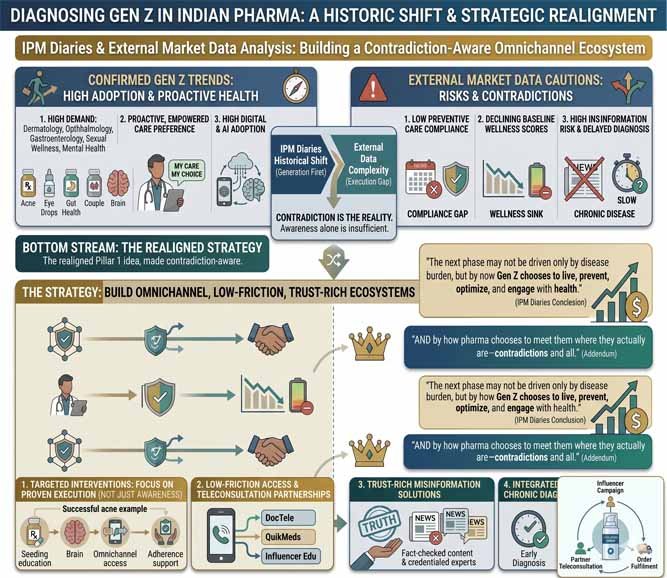
The original IPM Diaries deck correctly identifies a historic shift: Gen Z is the first prevention-oriented, digitally native, wellness-conscious generation in Indian pharma history. However, the external market data adds critical complexity:

Confirmed Trends: High demand for dermatology, ophthalmology, gastroenterology, sexual wellness, and mental health. High digital and AI adoption. A distinct preference for proactive, empowered care.

Cautions to Address: Low preventive care compliance. Declining baseline wellness scores. High misinformation risk mixed with a tendency to delay chronic disease diagnosis.

The Strategy: Pharma companies that build omnichannel, low-friction, trust-rich ecosystemsโ€”and that solve for execution rather than just awarenessโ€”will own the next decade of Indian pharma growth.

As the original deck concludes: The next phase of Indian Pharma growth may not be driven only by disease burden, but by how Gen Z chooses to live, prevent, optimize, and engage with health.

To that, we add a necessary addendum: and by how pharma chooses to meet them where they actually areโ€”contradictions and all.


Appendix: Sources

Indian Sources

  1. Burson, Gen Z: Calling for Healthcare Connection and Change (2025) โ€“ Survey of Indian Gen Z on health priorities, trust factors, and communication concerns.
  2. Business Standard, Gen Z drives demand for wellness and appearance-linked therapies (May 2026) โ€“ Market analysis of Pharmarack and CK Birla Hospital insights regarding youth therapy trends.
  3. ICICI Lombard-Kantar India Wellness Index 2025 โ€“ Comprehensive survey of 2,063 respondents across 19 Indian cities tracking generational wellness declines and rising lifestyle disease prevalence.
  4. ET-Snapchat Gen Z Index Q3 2025 conducted by Kantar โ€“ Survey of 741 Gen Z respondents across major metros detailing health priorities and digital information sources.
  5. IQVIA Consumer Health insights โ€“ Market data assessing how Gen Z associates overall health with glowing skin and hair compared to the millennial focus on physical and mental metrics.

International Sources

  1. Simon-Kucher and AESGP Better Health Report 2025 โ€“ Survey of more than 2,700 European consumers evaluating youth AI use, prevention awareness, and evolution of trust in pharmacists.
  2. Deloitte Global Gen Z and Millennial Survey 2025 โ€“ Evaluated for digital-native healthcare professional engagement trends.
  3. McKinsey and Company Healthcare Insights (2024-2025) โ€“ Utilized for annual wellness visit statistics comparing Gen Z habits against historical generation averages.
  4. Veeva Pulse Field Trends Report 2024 โ€“ Field data tracking modern healthcare professional engagement preferences.

Industry and Trade Publications

  1. Pharmarack internal Indian Pharmaceutical Market analytics โ€“ Data tracking therapy market share shifts where specialty segments cross the 25 percent volume threshold.
  2. India Business and Trade โ€“ Industry brief summarizing youth healthcare connection findings.
  3. Bioscience Today โ€“ Review of commercial excellence trends for digital-native field forces and medical representatives.

Hot this week

Character: The Ultimate Differentiator in Healthcare and Pharma

My friend Salil Kallianpur, in his Substack post "The...

Has the Pharmacy of the World Missed the Animal Health Bus?

In 2025, the Indian animal health market stood at...

Do Retail Pharmacies Really Care about Patients?

The chemist shopโ€”jammed between a chai stall and a...

Indian Oncology: An Unasked Question, the Challenges Ahead

A Brief History of Scale and an Unasked Question In...

Are Quick Remedies Keeping Patients Away from Doctors?

The recent Mint Lounge analysis captured a striking consumer...

Topics

Character: The Ultimate Differentiator in Healthcare and Pharma

My friend Salil Kallianpur, in his Substack post "The...

Has the Pharmacy of the World Missed the Animal Health Bus?

In 2025, the Indian animal health market stood at...

Do Retail Pharmacies Really Care about Patients?

The chemist shopโ€”jammed between a chai stall and a...

Indian Oncology: An Unasked Question, the Challenges Ahead

A Brief History of Scale and an Unasked Question In...

Are Quick Remedies Keeping Patients Away from Doctors?

The recent Mint Lounge analysis captured a striking consumer...

From Tragedy to Trust: What the CDCSO Can Learn from Dr. Frances Oldham Kelsey

Abstract The U.S. Food and Drug Administration (FDA) evolved from...

Biocon’s Landmark Succession Planning: Claire Mazumdar is the Future Leader

In a landmark decision for Indiaโ€™s biotechnology sector, Kiran...
spot_img

Related Articles

spot_imgspot_img