

The Indian Patent Office’s recent decision to revoke Novartis’ patent on the cardiac drug Vymada marks another chapter in the country’s robust stand for patient access against the tide of patent evergreening. At the heart of this and previous landmark cases lies Section 3(d) of the Indian Patent Act—a provision designed to ensure genuine innovation while preventing minor, incremental changes from being used to unjustly extend patent monopolies.
Landmark Cases: A Timeline
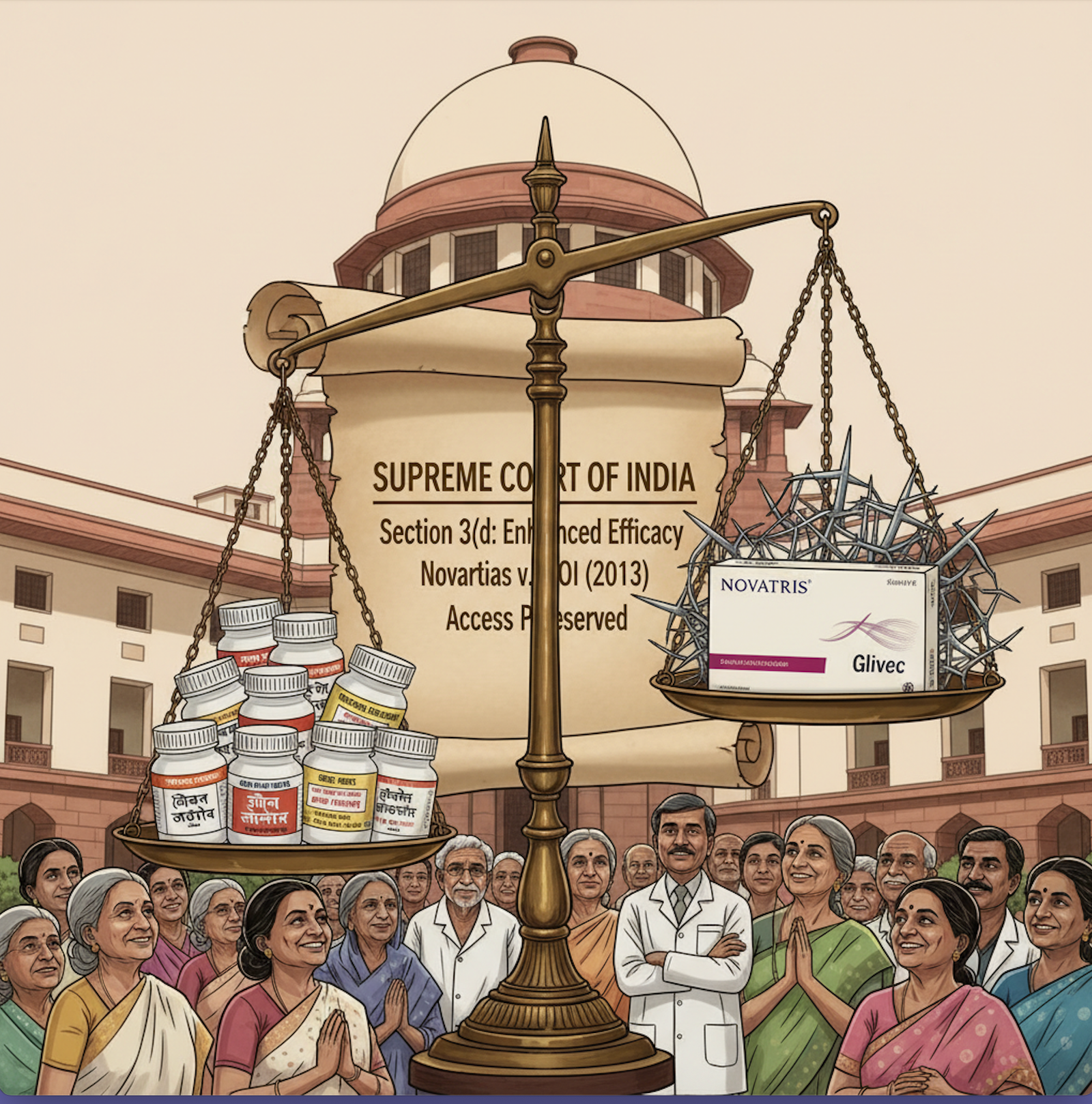
- Novartis v. Union of India (Glivec/Imatinib Mesylate): In 2013, the Supreme Court of India rejected Novartis’ application to patent a beta-crystalline form of the anti-cancer drug Glivec. The court ruled that the new version did not meet the higher bar of “enhanced efficacy” required by Section 3(d), and thus could not be patented. This decision was hailed by patient groups and humanitarian organizations for preserving affordable generic access, with the cost of generics being a fraction of branded Glivec’s price.[1][2][3][4][5]