

How wearables, diagnostics, AI and continuous monitoring are moving healthcare from episodic treatment to continuous health management
A forty-two-year-old woman wakes up with chest pain. She drives to the emergency room. She becomes a patient. That moment- the symptom, the visit, the diagnosis- has been healthcare’s primary point of entry for more than a century. But what if the system had been watching her physiology for years, detecting the pattern that led to that morning long before she felt anything? In most modern healthcare systems, the system is built around an event. A person develops symptoms. They visit a doctor. Tests are ordered. A diagnosis is made. Treatment begins. Follow-up happens periodically. As a result, the healthcare industry encounters most people relatively late in their health journey, often after they have already become patients. That model is now beginning to change.
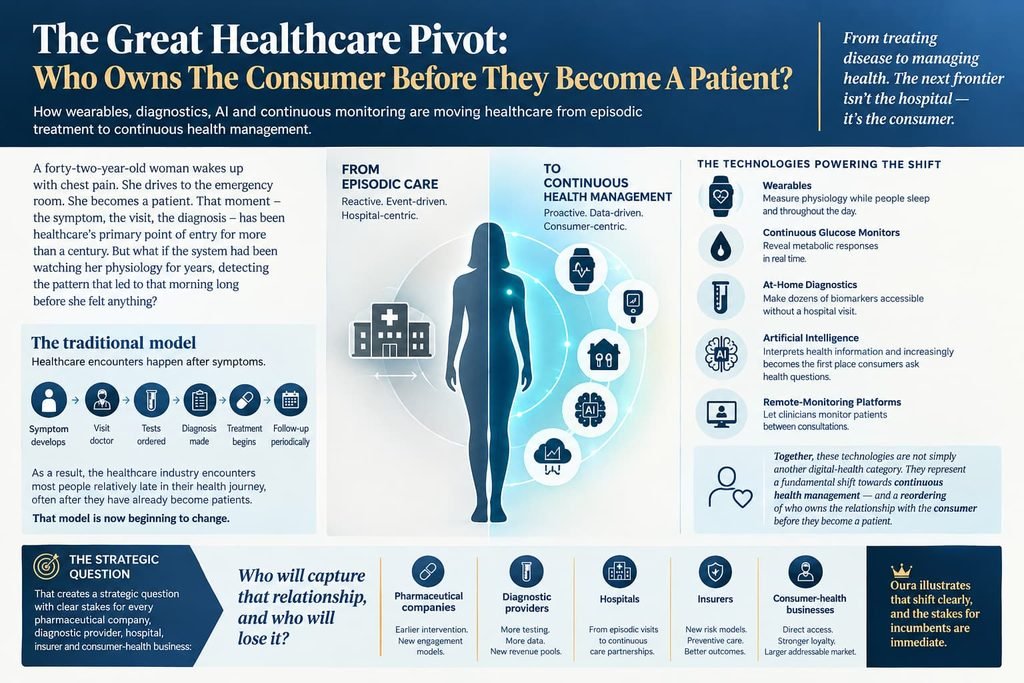
Wearables measure physiology while people sleep. Continuous glucose monitors reveal metabolic responses throughout the day. At-home diagnostics make dozens of biomarkers accessible without a hospital visit. Artificial intelligence interprets health information and increasingly becomes the first place consumers ask health questions. Remote-monitoring platforms let clinicians monitor patients between consultations.
What is emerging is not simply another digital-health category. It is a fundamental shift from episodic healthcare towards continuous health management—and a reordering of who owns the relationship with the consumer before they become a patient. That creates a strategic question with clear stakes for every pharmaceutical company, diagnostic provider, hospital, insurer and consumer-health business: who will capture that relationship, and who will lose it? Oura illustrates that shift clearly, and the stakes for incumbents are immediate.
Oura: More Than a Smart-Ring Story
The numbers Oura disclosed in its September 2026 IPO filing make the scale of this transition difficult to ignore. For the nine months ended June 30, 2026, Oura reported revenue of approximately $1.21 billion, up 74 per cent from the corresponding period a year earlier. Net income was approximately $60.8 million, while paid membership reached five million. Its weighted-average twelve-month paid-member retention was approximately 85 per cent.
But the numbers that matter most may not be on the income statement.
Oura says its platform has accumulated nearly 42 billion hours of longitudinal biometric data. That is more than a large dataset. It represents an evolving physiological history of millions of people—sleep, activity, recovery and other signals captured continuously rather than at occasional clinical encounters. Oura identifies three structural forces behind its growth: the shift from reactive healthcare towards proactive and continuous health management; increasing consumer ownership of healthcare decisions and spending; and advances in AI and wearable technology capable of converting continuous physiological data into personalised and increasingly predictive insights.
Together, these forces point to something much larger than the growth of the wearable-device market.
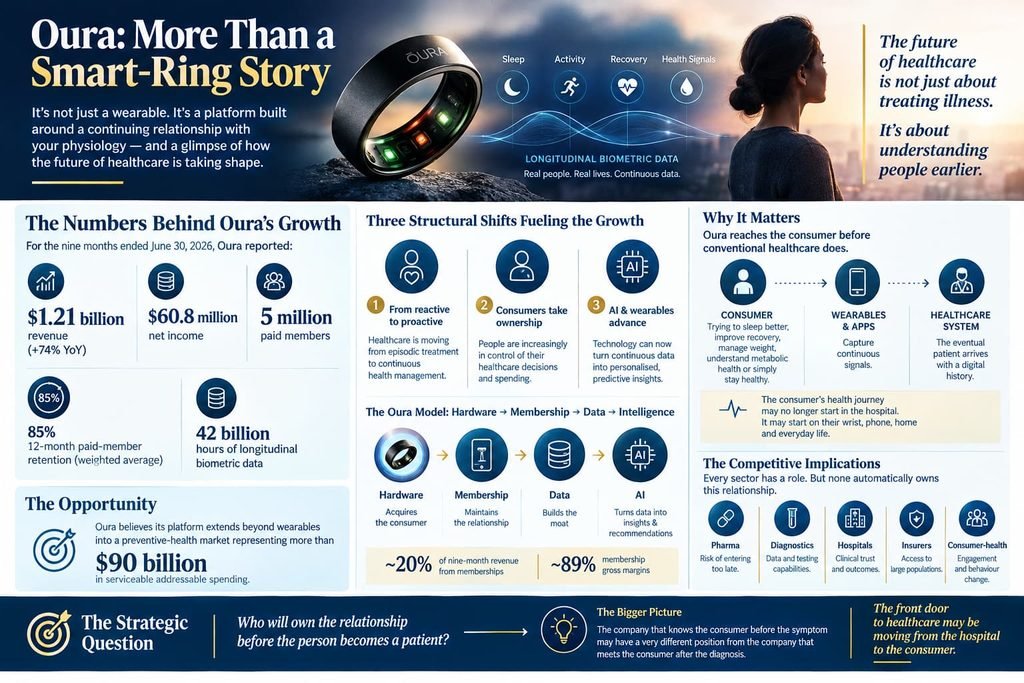
Oura believes its opportunity extends beyond wearables into a preventive-health market representing more than $90 billion in serviceable addressable spending. That is what makes the IPO strategically interesting.
Oura is not simply asking investors to value a smart-ring manufacturer. It is asking them to value a continuing relationship with human physiology. The ring gets the device onto the consumer’s body. The membership keeps the consumer engaged. The accumulated data deepens the relationship. AI can increasingly turn that data into interpretation, recommendations and potentially earlier signals of risk.
And the economics reinforce the model. Approximately one-fifth of Oura’s nine-month revenue came from memberships, while reported membership gross margins were around 89 per cent.
The hardware acquires the consumer.
The subscription maintains the relationship.
The data potentially creates the moat.
And that changes the strategic question for healthcare incumbents.
For decades, pharmaceutical companies, hospitals and diagnostic providers largely entered the consumer journey when a health problem became clinically visible. Oura—and companies pursuing similar models—are moving upstream. They engage with people while they are still consumers: when they are trying to sleep better, improve recovery, manage weight, understand their metabolic health or simply stay healthy. The eventual patient may therefore arrive at the healthcare system carrying a digital history that began somewhere else.
That is the strategic disruption. The company that knows the consumer before the symptom may have a very different position from the company that meets the consumer after the diagnosis. Oura’s significance, therefore, is not that a ring has become a billion-dollar business. It is that the front door to healthcare may be moving away from the hospital and towards the consumer’s wrist, phone, home and everyday life. And if that happens at scale, the battle will not simply be about who treats the patient. It will be about who owns the relationship before the person becomes one.
India: Prevention Without the Premium?
India makes this transformation particularly interesting because the economics of preventive healthcare have historically differed sharply from those of affluent Western markets. A premium wearable costing hundreds of dollars may appeal to India’s affluent urban consumer. But it cannot, by itself, transform healthcare for a country of more than 1.4 billion people. Even so, something notable is happening beneath the surface.
Counterpoint Research reported that Indian smartwatch shipments declined 30 per cent in 2024, the first major decline after years of rapid growth. Reasons included limited differentiation, sensor accuracy issues, and unsatisfactory experiences among some first-time buyers. Yet the premium smartwatch segment grew 147 per cent, which Counterpoint partly attributed to experienced users moving toward more advanced devices with better health insights and smartphone integration. That split reinforces the shift toward usefulness over price.
That suggests a telling shift. The Indian wearable story may be moving from how cheaply we can measure something towards how useful what we measure is, and that shift matters because it changes what companies must build to compete.
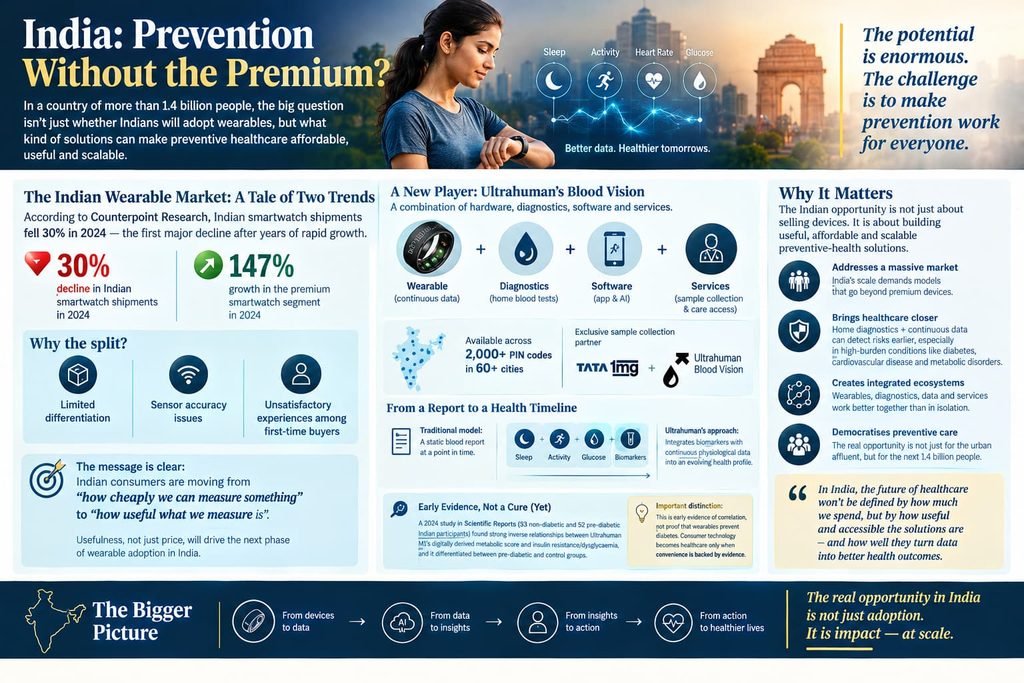
Indian health-tech companies are therefore experimenting with different combinations of hardware, diagnostics, software and services. One example is Ultrahuman’s Blood Vision. The service operates across more than 2,000 PIN codes in more than 60 cities. Ultrahuman says Tata 1mg is its exclusive partner for Blood Vision sample collection.
The significance goes beyond the availability of home blood tests. Ultrahuman is trying to connect conventional biomarkers with data from its broader digital ecosystem. Instead of a blood report existing as a static document, laboratory information can become part of an evolving health profile that incorporates sleep, activity, glucose, and other physiological data. In that sense, diagnostics begin to shift from an event into a timeline.
Ultrahuman has also generated early peer-reviewed evidence around this approach. A 2024 study in Scientific Reports examined 53 non-diabetic and 52 pre-diabetic Indian participants using the Ultrahuman M1 continuous glucose monitoring platform. Its digitally derived metabolic score showed strong inverse relationships with measures of insulin resistance and dysglycaemia and differentiated between the pre-diabetic and control groups. Still, the study should not be interpreted as proof that a wearable platform prevents diabetes. It is better understood as early evidence that digitally generated physiological measures may correlate meaningfully with established clinical biomarkers. That distinction is important. Consumer health technology becomes healthcare only when convenience is accompanied by evidence.
Different Business Models Are Emerging
Gabit, founded by former Zomato co-founder Gaurav Gupta, illustrates another experiment. Rather than relying on a mandatory subscription for its smart ring, Gabit has promoted a subscription-free hardware proposition while building a wider ecosystem around diagnostics, metabolic health, nutrition, fitness and other services. Its platform describes the ability to analyse more than 150 biomarkers using information from sources including its smart ring, blood work, continuous glucose monitoring and smart scales.
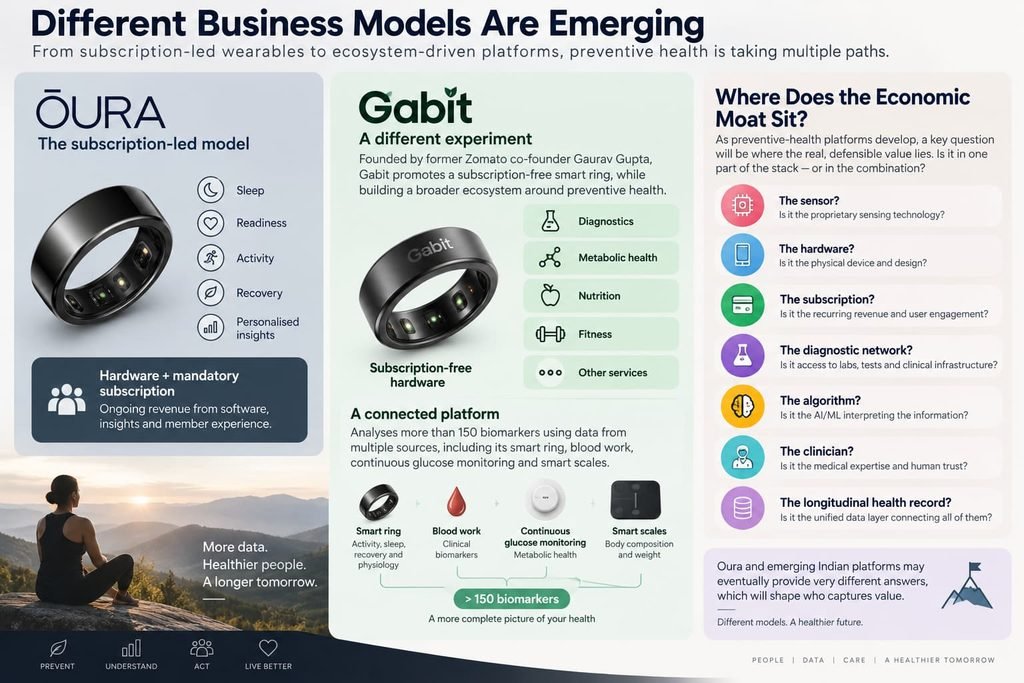
This raises a question that will become increasingly important as preventive-health platforms develop. Where does the economic moat actually sit? Is it in the sensor? The hardware? The subscription? The diagnostic network? The algorithm interpreting the information? The clinician? Or the longitudinal health record connecting all of them? Oura and emerging Indian platforms may eventually provide very different answers, which will shape who captures value.
From Wellness to Clinical Monitoring
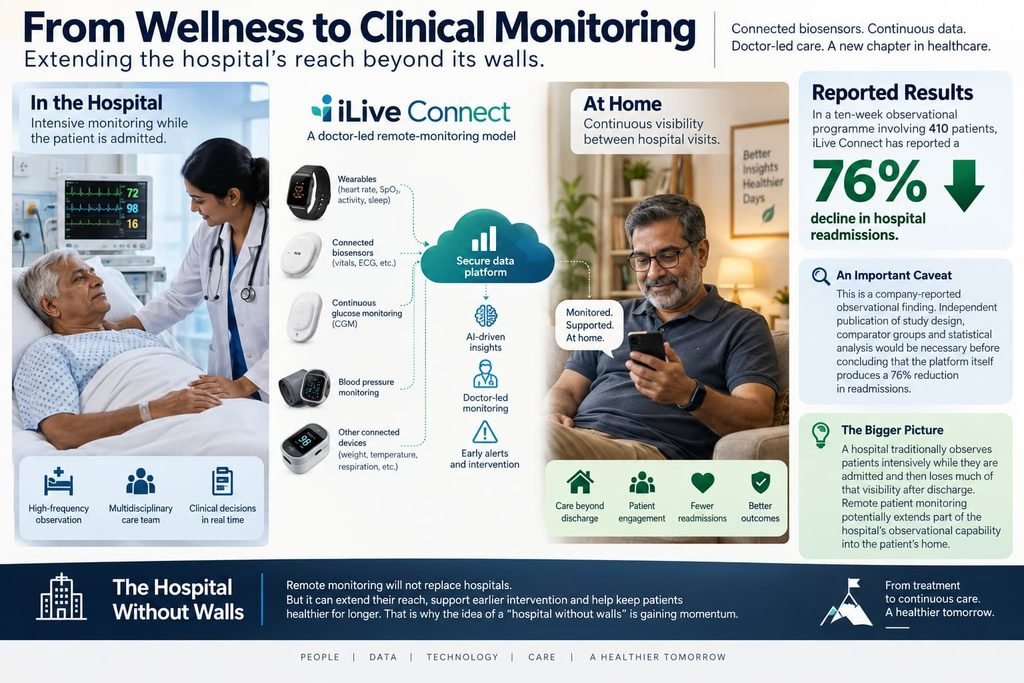
This shift from wellness to clinical medicine raises the stakes dramatically. Chennai-based iLive Connect describes a doctor-led remote-monitoring model using connected biosensors and continuous telemetry to identify deterioration between conventional encounters with the healthcare system. The company has reported results from a ten-week observational programme involving 410 patients in which hospital readmissions reportedly declined by 76 per cent.
That finding is potentially significant, but it needs careful interpretation. The result is currently a company-reported observational finding. Independently published information on study design, comparator groups and statistical analysis would be necessary before concluding that the platform itself produces a 76 per cent reduction in readmissions.
More broadly, the principle is compelling. A hospital traditionally observes patients intensively while they are admitted and then loses much of that visibility after discharge. Remote patient monitoring potentially extends part of the hospital’s observational capability into the patient’s home. That is why the phrase hospital without walls is becoming increasingly relevant.
GLP-1s Show Where This Could Go Next
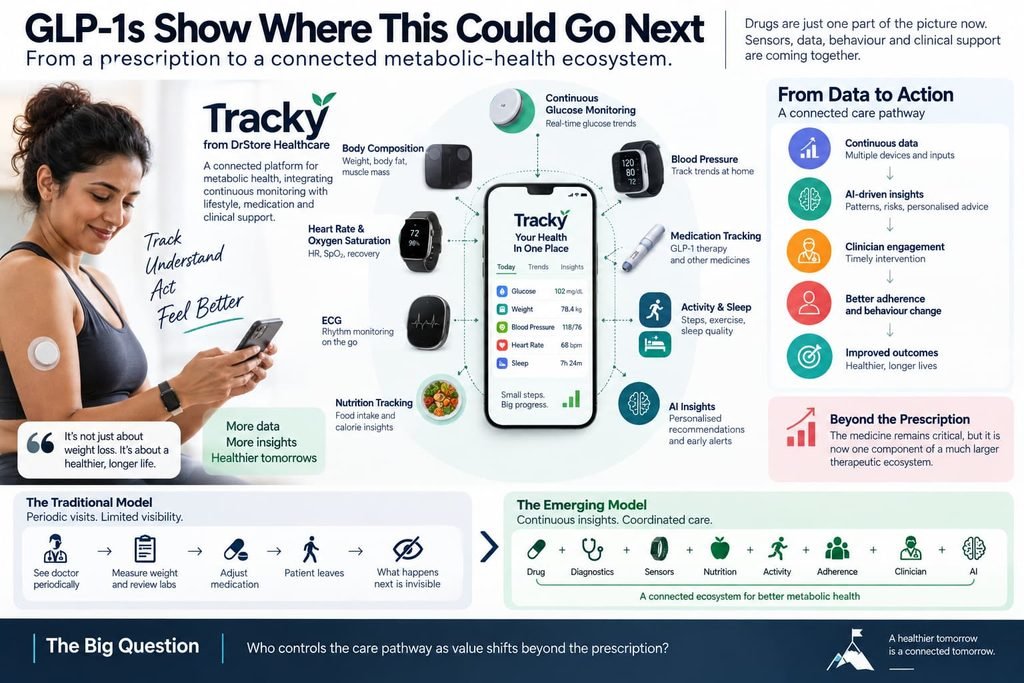
The emerging metabolic-health ecosystem makes the shift especially clear. Tracky, from DrStore Healthcare, integrates continuous glucose monitoring with measures including body composition, blood pressure, heart rate, oxygen saturation, ECG, food intake, medication and GLP-1 therapy tracking.
Consider what that means for obesity and diabetes care. Historically, the physician sees the patient periodically. Weight is measured. Laboratory results are reviewed. Medication is adjusted. The patient leaves. Much of what happens during the following weeks or months remains invisible. Continuous monitoring changes the information architecture. As the emerging model potentially connects drug, diagnostic, sensor, nutrition, activity, adherence, clinician and AI, the medicine remains critical, but it becomes one component of a much larger therapeutic ecosystem. That is the central change, and it raises a strategic question: who controls the care pathway as value shifts beyond the prescription?
Pharma May Own the Molecule But Not the Patient Journey
The traditional pharmaceutical business model usually begins relatively late. Disease develops. Diagnosis occurs. A prescription is written. The pharmaceutical company supplies the medicine. By contrast, a wearable or health platform may have established a relationship with that individual years earlier. It may already understand patterns in their sleep, activity, resting heart rate, glucose, weight, recovery, nutrition and laboratory biomarkers. When that consumer eventually develops hypertension, obesity, diabetes, cardiovascular disease, PCOS, metabolic liver disease or another chronic condition, the platform may possess something the pharmaceutical manufacturer does not: the longitudinal relationship. That is the strategic issue, because it affects who shapes engagement before treatment begins and who holds influence when care starts.
That creates a strategic inversion. Pharma may own the molecule, but the digital-health platform may own the patient journey and, with it, the relationship that shapes engagement.
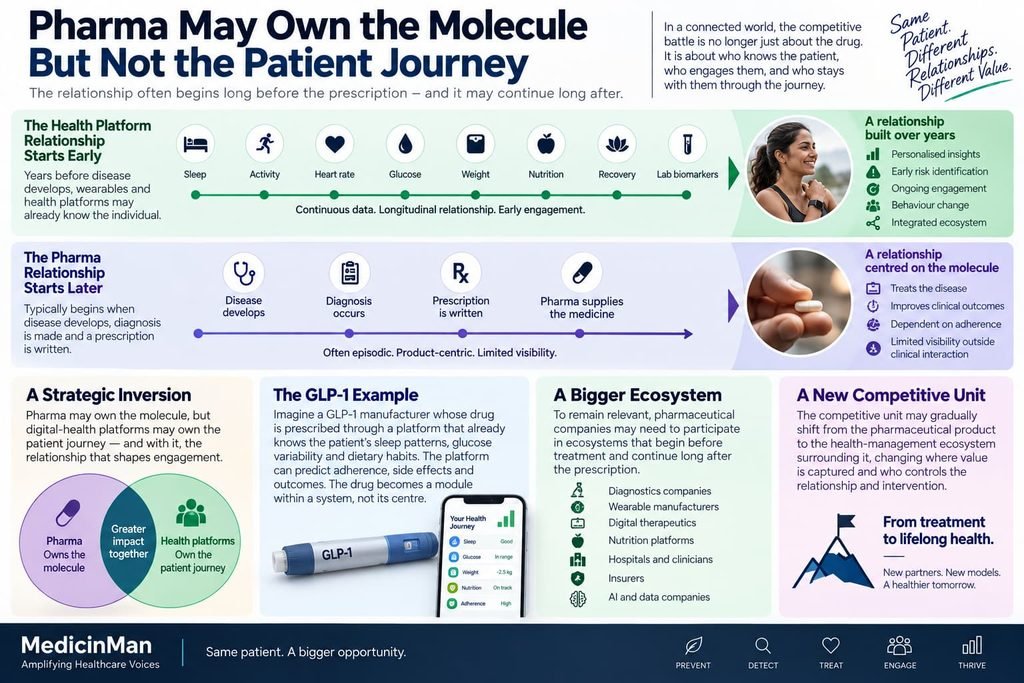
Imagine a GLP-1 manufacturer whose drug is prescribed through a platform that already knows the patient’s sleep patterns, glucose variability, and dietary habits. The platform can predict adherence, side effects, and outcomes. The drug becomes a module within a system, not its centre.
So the question for pharmaceutical companies is no longer simply whether they should build an app around a medicine. It is whether they should participate in ecosystems that begin before pharmacological treatment and continue long after the prescription is written, because those ecosystems may determine access, engagement, and influence. That may mean partnerships with diagnostics companies, wearable manufacturers, digital therapeutics, nutrition platforms, hospitals, insurers and AI companies.
The competitive unit may gradually shift from the pharmaceutical product to the health-management ecosystem surrounding it, changing where value is captured and who controls the relationship and intervention.
Diagnostics Could Move From Snapshots to Movies
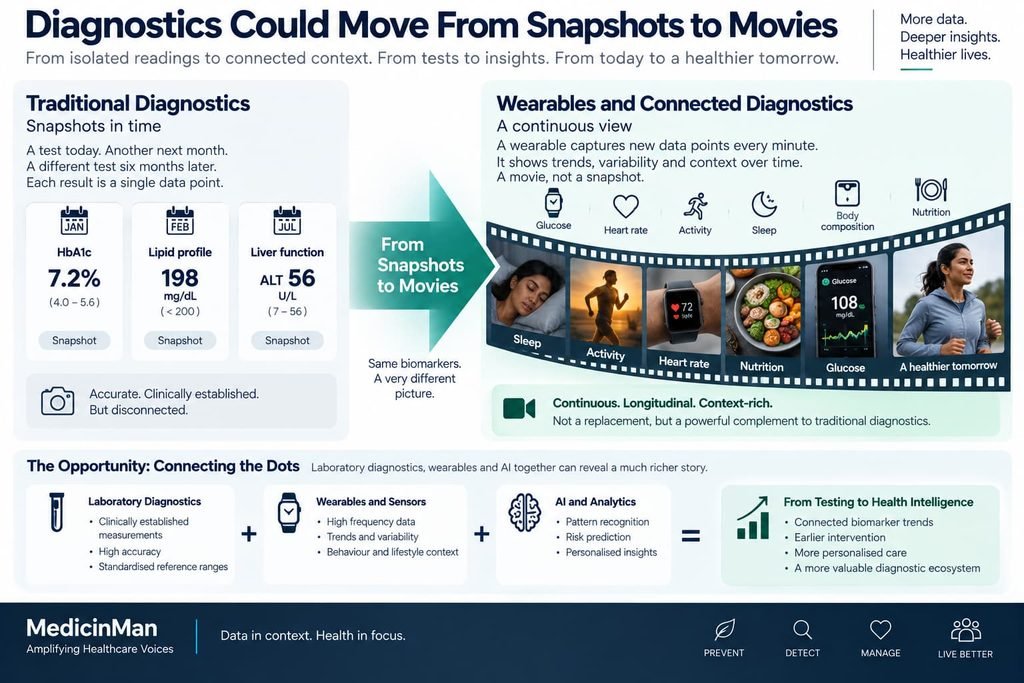
Traditional diagnostics produce snapshots. HbA1c today. A lipid profile next month. A liver-function test six months later. A wearable produces something closer to a movie. Neither replaces the other. The opportunity lies in connecting them. Laboratory diagnostics provide clinically established measurements. Wearables provide frequency and longitudinal context. AI potentially helps identify patterns across both. The central diagnostic shift is from isolated readings to connected context. A future diagnostic report may therefore be less about whether one number lies outside a reference range and more about how multiple biomarkers change over time and what those changes mean in the context of behaviour and physiology. That shift could transform diagnostics from a testing business into a health-intelligence business, with clearer strategic value for whoever controls the data layer.
Hospitals Face the Hospital-Without-Walls Challenge
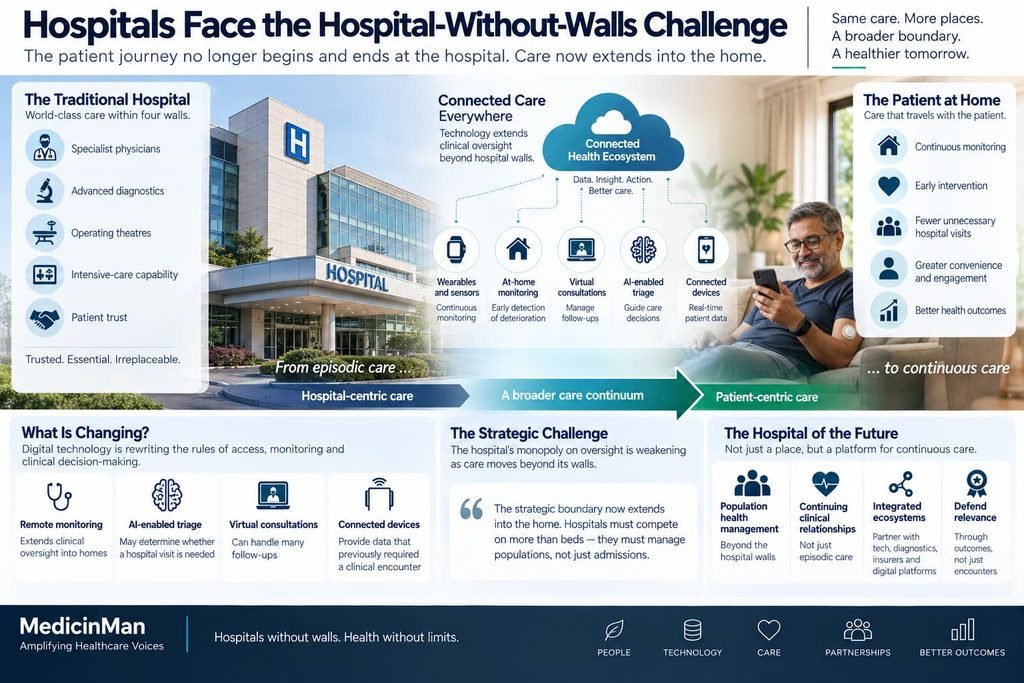
Hospitals have historically controlled some of healthcare’s most valuable assets: specialist physicians, sophisticated diagnostics, operating theatres, intensive-care capability and patient trust. But hospitals are physical institutions. As digital monitoring expands, the relationship becomes portable. Remote patient monitoring can potentially extend clinical oversight into homes. AI-enabled triage may increasingly determine whether a patient needs to visit a hospital at all. Virtual consultations can handle some follow-ups. Connected devices can provide information that previously required a clinical encounter. The core challenge is no longer only inside the hospital, because the strategic boundary now extends into the home and weakens the hospital’s monopoly on oversight.
The hospital of the future therefore may not simply compete on beds. It may compete on its ability to manage populations beyond those beds, and the strategic objective shifts from maximising encounters towards maintaining a continuing clinical relationship and defending relevance.
Insurers Could Become Powerful Players
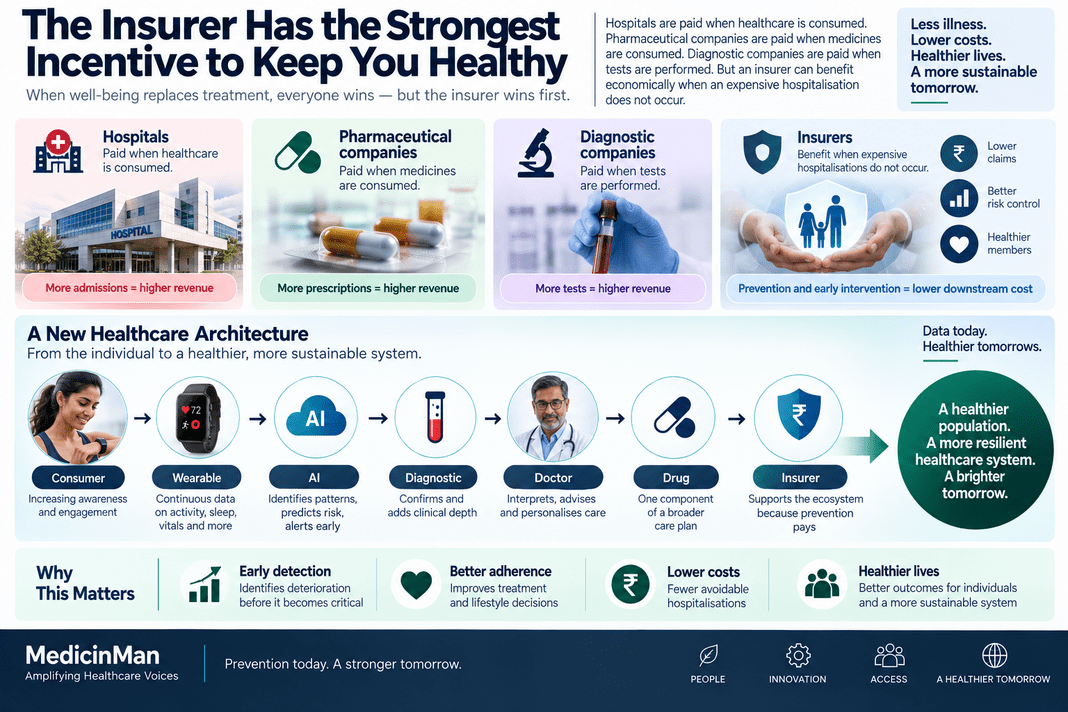
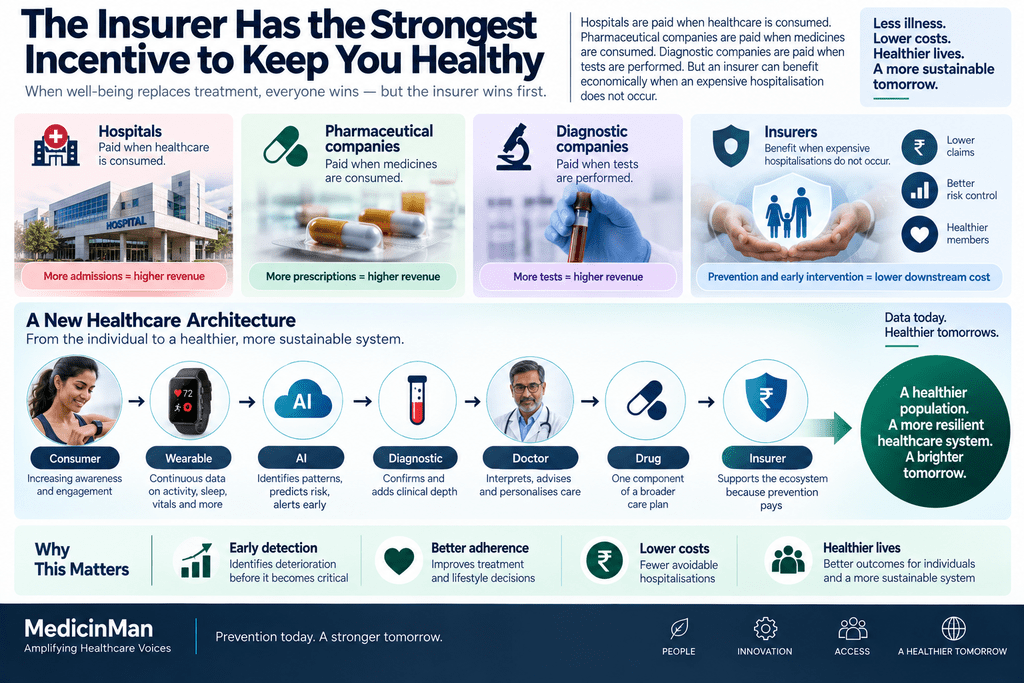
The insurer may ultimately have one of the strongest economic incentives to accelerate this transition. Hospitals are paid when healthcare is consumed. Pharmaceutical companies are paid when medicines are consumed. Diagnostic companies are paid when tests are performed.
But an insurer can benefit economically when an expensive hospitalisation does not occur. If continuous monitoring can reliably identify deterioration early, improve adherence, encourage appropriate lifestyle interventions or prevent avoidable admissions, insurers have a direct financial reason to subsidise these technologies. The strategic payoff is lower downstream cost and greater control over risk. That incentive is unusually strong, because it changes who pays to shape behaviour before costs escalate and who benefits when they do not.
That could produce a new healthcare architecture: consumer to wearable to AI to diagnostic to doctor to drug to insurer. The wearable then stops being a gadget. Instead, it becomes part of healthcare infrastructure, with strategic importance for access, data, influence, and care allocation.
A Consumer Perspective
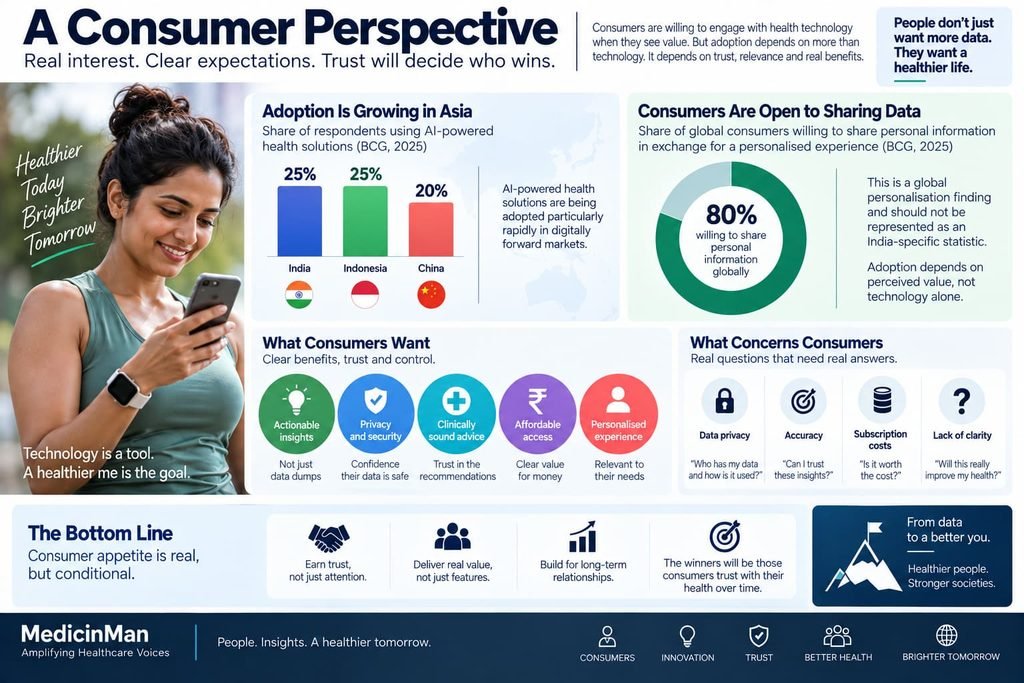
Yet amid all this strategic positioning, it is worth asking what consumers actually want. In its 2025 longevity research, BCG reported that AI-powered health solutions were being adopted particularly rapidly in digitally forward markets. Among Indian respondents, 25 per cent reported using such tools, alongside 25 per cent in Indonesia and 20 per cent in China.
BCG separately reported that 80 per cent of consumers would share personal information in exchange for a personalised experience, including in healthcare settings. This is a global personalisation finding and should not be represented as an India-specific statistic. So the strategic point is that adoption depends on perceived value, not technology alone. Consumer appetite is real, but conditional, and that shapes which business models can scale.
Consumers are clearly willing to engage with health technology when they perceive value. But they also worry about privacy, accuracy, and subscription costs. They want actionable insights, not just data dumps. They want reassurance that their information is secure and that the recommendations they receive are clinically sound. So the companies that succeed will earn genuine trust, not just fleeting attention. That trust is the real differentiator, because it determines who can hold the relationship over time.
But Prevention Is Not the Same as Wellness
There is an important caution. The words wellness, prevention, diagnosis, monitoring and treatment are increasingly used interchangeably. They should not be. A healthy individual tracking sleep with a ring is engaged primarily in wellness or risk awareness. Someone using biomarkers to identify metabolic deterioration may be entering preventive care. A person with diagnosed diabetes using CGM is engaged in disease management. A cardiac patient wearing telemetry following discharge is receiving remote clinical monitoring. And a physician diagnosing or treating disease remains engaged in medical care. These distinctions matter because they define who owns the relationship and what is actually being sold. So the distinction matters, and so does the strategic boundary between consumer engagement and clinical responsibility.
These activities increasingly overlap, but they are not identical. The emerging continuum is better understood as wellness to risk detection to prevention to diagnosis to treatment to continuous monitoring. Digital health matters because it is beginning to connect stages that were historically separate, reshaping where value and influence sit across the care pathway and who can shape it. That is the larger shift, and it is why strategic control now matters.
Smart Rings Are Still Small, But the Direction Matters
Smart rings themselves remain a relatively small category. IDC recorded roughly 880,000 global smart-ring sales in 2023, compared with about 161 million smartwatches. But IDC projected smart-ring sales to reach 3.2 million units by 2028. In IDC’s estimate, Oura represented about 80 per cent of the 2023 smart-ring market, with Ultrahuman at about 12 per cent.
The important story therefore is not that smart rings will replace smartwatches. It is that sensors are becoming smaller, more passive, more continuous and increasingly integrated into health-information ecosystems. The eventual device could be a ring, watch, patch, implant, phone, clothing or something else entirely. The strategic asset is not necessarily the form factor. Rather, it is the continuous stream of health information, because that stream can shape engagement, interpretation, and intervention. That is what matters, and that is where strategic value accumulates.
Healthcare Is Moving From Episodes to Streams
That may be the simplest way to understand the Great Healthcare Pivot. The old healthcare architecture was episodic: symptom to doctor to test to diagnosis to treatment to follow-up. The emerging architecture is continuous: measure to detect to interpret to intervene to measure again. The strategic consequence is a shift from isolated encounters to ongoing management, with clearer implications for control, value, accountability, and who influences care over time. That is the pivot.
That changes the competitive landscape. For pharmaceutical companies, the question becomes whether the medicine remains the centre of the patient relationship or becomes one component inside someone else’s health ecosystem. For diagnostic companies, the opportunity is to move from isolated tests towards longitudinal health intelligence. For hospitals, the challenge is to extend care beyond physical facilities. For insurers, continuous health information creates the possibility of intervening before expensive events occur. For consumer-health companies, the opportunity is perhaps greatest: to build relationships with people while they still consider themselves healthy. In each case, the strategic stakes are control, timing and ownership of the relationship. That is where the market may move.
The Regulatory Wild Card
None of this unfolds in a regulatory vacuum. Data privacy laws, FDA oversight of software as a medical device, AI regulation, and international data transfer rules could reshape the landscape significantly. In the United States, the FTC has signalled increasing scrutiny of how health data is collected and shared. In Europe, the AI Act imposes new obligations on high-risk applications, which could include diagnostic algorithms.
In India, the Digital Personal Data Protection Act is still taking shape, and its application to health data remains uncertain. These frameworks could either accelerate the pivot by providing clear rules of the road or slow it by creating compliance burdens that only the largest players can absorb. The companies that navigate this terrain skilfully, building privacy and security into their products from the start, will have a durable advantage. Those that treat regulation as an afterthought may find themselves locked out of the very markets they hoped to transform.
The Great Battle May Be for the Pre-Patient
For more than a century, healthcare companies competed primarily for patients. The next competitive frontier may begin considerably earlier. A thirty-five-year-old monitoring sleep, weight, glucose, exercise and cardiovascular fitness may not think of herself as a patient. But she is already generating health information. She is already making health decisions. She may already be purchasing diagnostics. She may already be receiving AI-generated health recommendations. And she may eventually require medicines, physicians, hospitals or insurance-funded interventions. Whoever earns her trust before that happens occupies an extraordinarily powerful position.
That does not mean technology will prevent everyone from becoming a patient. Nor does continuous measurement automatically translate into better health outcomes. More information can also generate false alarms, unnecessary investigations, anxiety and inappropriate self-treatment. Clinical validation therefore matters. So do privacy, cybersecurity, informed consent, algorithmic bias and regulatory oversight.
As healthcare data becomes more valuable, another question becomes unavoidable: who owns the data generated by the human body? The consumer? The device company? The hospital? The insurer? The AI platform interpreting it? These questions will determine whether continuous health management becomes an empowering healthcare model or simply another extraordinarily powerful data economy.
Several ownership models are conceivable. A consumer-owned model would give individuals full control over their data, with consent required for every use. A platform-owned model would allow device makers to aggregate and monetise data, potentially lowering hardware costs in exchange. A distributed model might share data across multiple stakeholders, with governance frameworks ensuring no single entity holds all the cards. Each approach has trade-offs between privacy, innovation and cost. The debate over which model prevails will shape the industry for decades.
The Strategic Question
Oura’s IPO should therefore not be viewed simply as evidence that smart rings have become fashionable. It represents something larger. Consumers are demonstrating that they are willing to spend money to understand their health outside traditional healthcare encounters. Technology companies are building longitudinal relationships that historically belonged primarily to doctors and hospitals. Diagnostics are moving into homes. AI is becoming a new front door to health information. Remote monitoring is extending clinical observation beyond hospital walls.
The boundary between being healthy and being a patient is becoming less binary. It is becoming a continuum. And that creates perhaps the most important strategic healthcare question of the coming decade: if consumers begin managing their health years before they require treatment, who will own the relationship before they become patients? The pharmaceutical company? The diagnostic provider? The hospital? The insurer? The wearable company? The AI platform? Or the consumer?
The companies that answer that question successfully may define the next healthcare ecosystem. The next healthcare giants may not be companies that treat the sick. They may be companies that know the healthy better than anyone and earn the right to keep them that way.
Appendix: Key Sources and Evidence Notes
1. Oura Inc. Form S-1, US Securities and Exchange Commission, filed September 3, 2026
Primary source for Oura’s roughly $1.21 billion nine-month revenue, 74 per cent year-on-year growth, five million paid members, retention methodology, longitudinal-data strategy and positioning around proactive, continuous health management. Oura also describes a serviceable addressable preventive-health opportunity exceeding $90 billion.
2. Oura IPO financial reporting, September 2026
Contemporary financial reporting shows roughly $60.8 million in nine-month net income, about 20 per cent of revenue from memberships, and membership gross margins of approximately 89 per cent. These economics illustrate why the recurring health relationship may be strategically more valuable than hardware alone.
3. Boston Consulting Group, The Longevity Paradox / Why We Don’t Plan for Healthy Ageing Before It’s Too Late, 2025
BCG reports 25 per cent usage of AI-powered health solutions among Indian respondents, equal to Indonesia and ahead of China at 20 per cent. BCG also cites separate 2025 personalisation research finding that 80 per cent of people would share personal information in exchange for a personalised experience, including healthcare. The 80 per cent statistic is not specifically an India figure.
4. Boston Consulting Group, Consumers Are Ready for AI-Enabled Health Care, 2026
BCG surveyed 13,353 internet-connected consumers across 15 countries in November 2025 and found that nearly 60 per cent had engaged with GenAI for health. Adoption was particularly strong in emerging markets including India. Among existing users, AI-enabled wearables and AI sleep tracking were among the most-used health-AI applications.
5. India 32 per cent wearable-penetration claim, excluded
The specific claim that India has 32 per cent wearable penetration could not be sufficiently substantiated from the identified primary BCG material. It has therefore deliberately not been used as a factual claim in this article.
6. Ultrahuman Blood Vision
Ultrahuman states that Blood Vision is available across more than 2,000 PIN codes in 60-plus Indian cities and identifies Tata 1mg as its exclusive sample-collection partner.
7. Scientific Reports, 2024, Ultrahuman M1 metabolic-health study
Peer-reviewed observational research involving 53 non-diabetic and 52 pre-diabetic Indian participants found that the digitally derived metabolic score showed strong inverse relationships with markers of insulin resistance and dysglycaemia. The findings represent early validation, not evidence that the technology itself prevents diabetes.
8. iLive Connect
The company reports a ten-week observational programme involving 410 patients and a 76 per cent reduction in hospital readmissions; because the readily available evidence is company-reported rather than from an independently published controlled clinical trial, the article explicitly qualifies the finding.
9. Counterpoint Research, India smartwatch market
Counterpoint reported that Indian smartwatch shipments declined 30 per cent year-on-year in 2024, citing factors including weak upgrade cycles, limited differentiation and unsatisfactory first-time-user experiences. In contrast, the premium segment grew 147 per cent, driven in part by experienced users seeking advanced products and better health insights.
10. IDC, The Future of Smart Rings
IDC recorded roughly 880,000 global smart-ring sales in 2023 and projected 3.2 million in 2028. It estimated Oura at approximately 80 per cent and Ultrahuman at 12 per cent of 2023 smart-ring sales. For perspective, about 161 million smartwatches were sold globally in 2023.
11. Oura IPO, current status as of September 8, 2026
Oura publicly filed its Form S-1 on September 3, 2026 and intends to list on Nasdaq under the ticker OURA. At the time of writing, the initial filing had not specified the final number of shares, IPO price or final valuation. Contemporary reporting expects a valuation above its previous private-market valuation of about $11 billion. The IPO should therefore be described as filed and proposed, not yet as a completed public listing.