
Wednesday, August 26, 2026
27.9 C
Bengaluru

GLP-1: When the Molecule Becomes a Commodity, What Becomes the Moat?

STOP PRESS
August 10, 2026: Regulatory Authorisation — The UK Medicines and Healthcare products Regulatory Agency (MHRA) officially approved/authorised orforglipron (Foundayo).
August 24, 2026: Commercial Launch — Eli Lilly officially launched the drug in the UK, making it available to patients via private prescriptions.

The Real GLP-1 War in India: When the Molecule Becomes a Commodity, What Becomes the Moat?

The GLP-1 revolution has entered a new phase: competition now shifts from the molecule to everything around it. Eli Lilly’s Foundayo (orforglipron) launched in the UK, making Britain the first European market for Lilly’s once-daily oral GLP-1. Unlike oral semaglutide, orforglipron is a non-peptide small molecule: no food/water restrictions, no sterile injection devices, no complex fill-finish, and no refrigeration. For India, where Novo Nordisk’s core semaglutide patent expired on March 20, 2026, the strategic stakes are clear: competitors must now win on distribution, adherence, trust, and ecosystem support, not just on the molecule. As the molecule becomes a commodity, competitive advantage shifts to everything surrounding it.
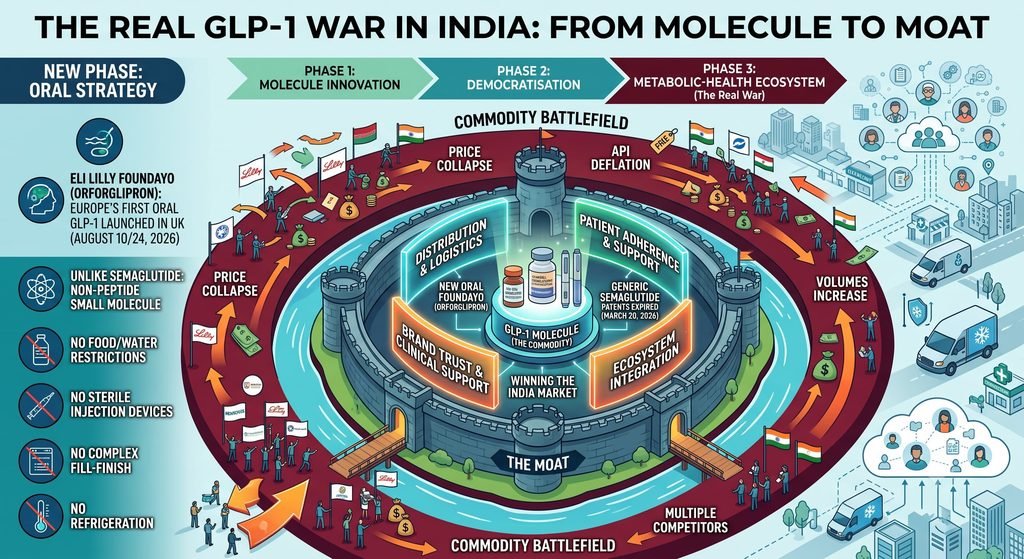

India’s GLP-1 Gold Rush & API Deflation

Following semaglutide’s patent cliff, 26 brands from 13 companies launched almost immediately. Natco introduced multidose injectables at Rs 1,290–1,750/month, and industry projections point toward Rs 500/month as API prices fall from US$900/g down to US$50–160/g. The strategic effect is clear: the market is moving from molecule-level pricing power to competition on scale, cost discipline, and market access. Turning synthetic or recombinant peptides into sterile injectables still requires strict purity standards, but manufacturers are now competing less on the molecule itself.

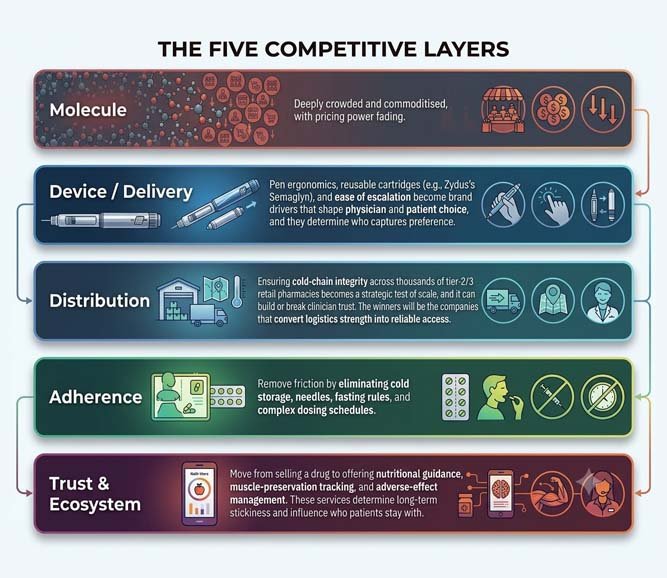
The Five Competitive Layers

  1. Molecule: Deeply crowded and commoditised, with pricing power fading.
  2. Device / Delivery: Pen ergonomics, reusable cartridges (e.g., Zydus’s Semaglyn), and ease of escalation become brand drivers that shape physician and patient choice, and they determine who captures preference.
  3. Distribution: Ensuring cold-chain integrity across thousands of tier-2/3 retail pharmacies becomes a strategic test of scale, and it can build or break clinician trust. The winners will be the companies that convert logistics strength into reliable access.
  4. Adherence: Remove friction by eliminating cold storage, needles, fasting rules, and complex dosing schedules.
  5. Trust & Ecosystem: Move from selling a drug to offering nutritional guidance, muscle-preservation tracking, and adverse-effect management. These services determine long-term stickiness and influence who patients stay with.

The Risk of “Vitaminization”

As prices drop, GLP-1s risk migrating into casual, unmonitored consumer weight-loss products. Given boxed warnings around pancreatitis, gastrointestinal risks, and thyroid C-cell potential, unmonitored adoption is hazardous. The strategic risk is clear: genericisation doesn’t kill brands; it shifts physician preference toward trusted manufacturers with robust pharmacovigilance and cold-chain compliance, while weaker players lose credibility.

LayerStrategyKey Focus
Pill vs. NeedleFriction ReductionRoom-temperature stability and zero administration barriers drive long-term compliance.
Brand DifferentiationDelivery & SupplyReliable pens, tamper-proof packaging, and guaranteed storage integrity.
Metabolic PlatformEcosystem MoatPairing therapy with protein supplementation, exercise coaching, and digital monitoring.

Sources & Reference Summary

  • MHRA & eMC (UK): Confirmed August 10, 2026 authorisation and room-temperature stability of Foundayo (0.8 mg–17.2 mg maintenance dosing).
  • Fortune India & Economic Times: Reported March 20, 2026 semaglutide patent expiration, 26 brand launches, Natco pricing, and API deflation ($900/g to $50–160/g).
  • CARE Ratings: Projected a 5x growth in the Indian GLP-1 market over five years (March 2026 analysis).
  • MedicinMan Analysis: Frameworks on the Semaglutide Paradox, Vitaminization risks, and Brand Drift toward integrated metabolic health platforms.

Editorial Note: GLP-1 agonists are prescription metabolic therapies requiring medical oversight, dose titration, and lifestyle integration.

Hot this week

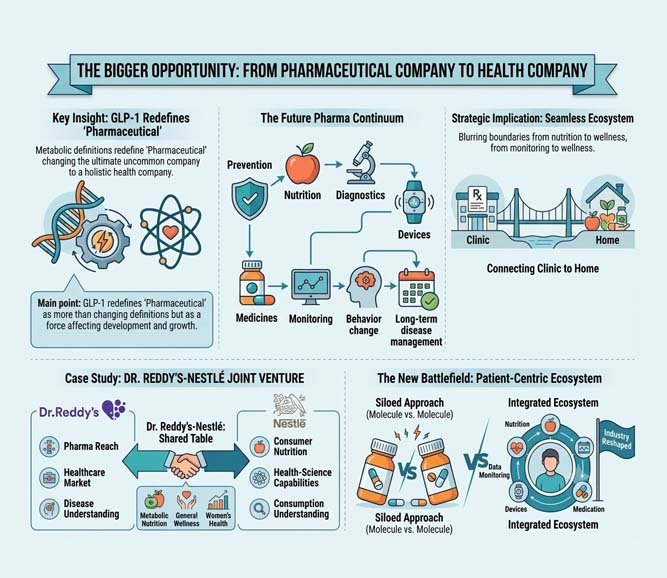
How To See Dr Reddy’s Nestle In The Wellness Shift

GLP-1 medicines such as semaglutide and tirzepatide are changing...

How To Power The India Biopharma Regulatory Revolution Now

Beyond the Pharmacy of the World: Why India's Biopharma...

Will Mounjaro Disrupt Existing Therapy Areas Like Cardiology?

Something remarkable has happened in the Indian pharmaceutical market....

Can India Pivot From Low-Cost Medical Tourism to Trusted Medical Value Travel?

C-Suite Executive Summary India stands at a pivotal juncture in...

Rajesh Bhogavalli has been appointed as Chief Commercial Officer of ACG Group.

With over 25 years of leadership experience across commercial...

Topics

How To See Dr Reddy’s Nestle In The Wellness Shift

GLP-1 medicines such as semaglutide and tirzepatide are changing...

How To Power The India Biopharma Regulatory Revolution Now

Beyond the Pharmacy of the World: Why India's Biopharma...

Will Mounjaro Disrupt Existing Therapy Areas Like Cardiology?

Something remarkable has happened in the Indian pharmaceutical market....

Can India Pivot From Low-Cost Medical Tourism to Trusted Medical Value Travel?

C-Suite Executive Summary India stands at a pivotal juncture in...

Will President Trump’s Diktat Improve Drug Quality For Indian Patients?

Executive Summary The geopolitical landscape of pharmaceutical manufacturing is shifting...

Mounjaro is the Exceptional Growth Story: Ranks #1

The July Brand Monitor by Pharmarack shows a healthy...

Sun Pharma: In the Eye of the Storm of Ophthalmologists

The Two-Tier Reality of Indian Pharma: Patient Safety, Pharmacovigilance,...
spot_img

Related Articles

spot_imgspot_img