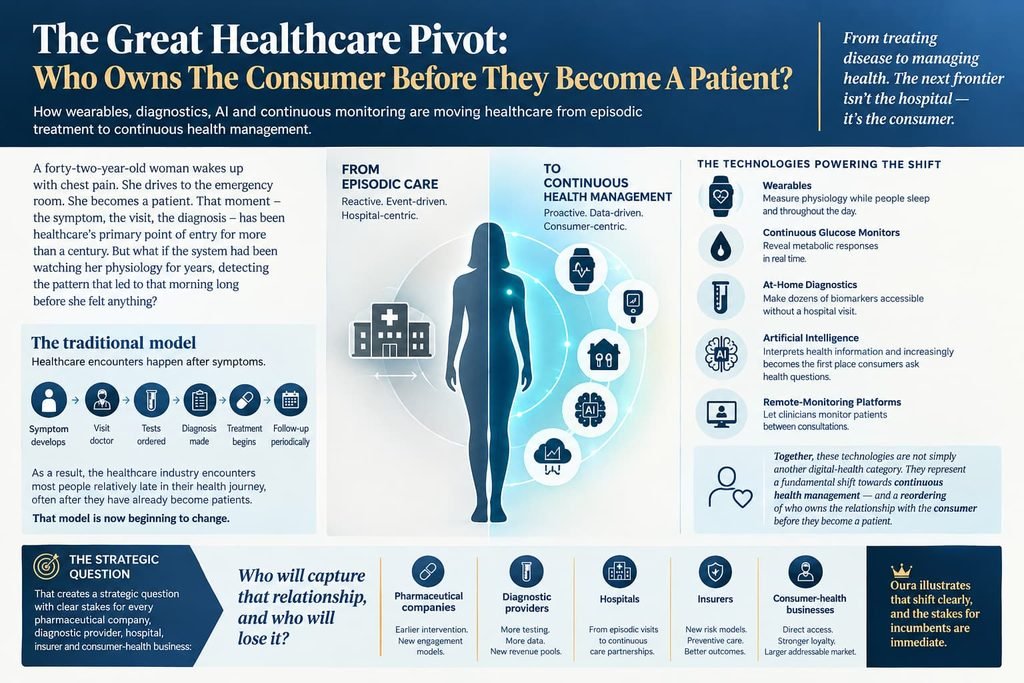

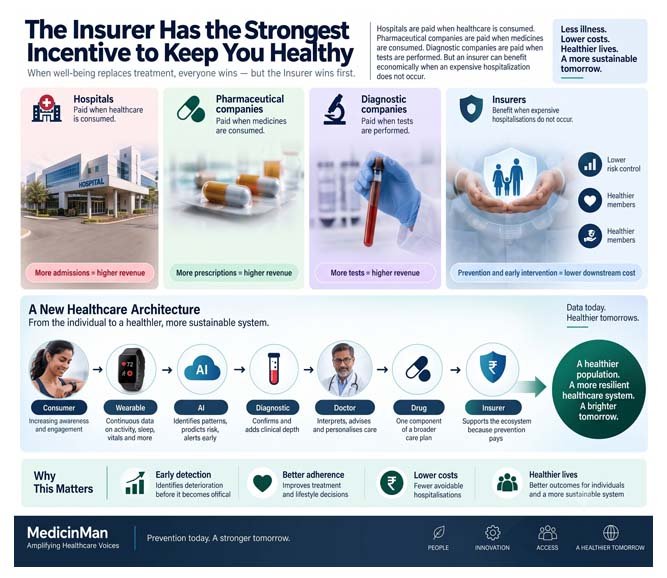

How wearables, diagnostics, AI and continuous monitoring are moving healthcare from episodic treatment to continuous health management
A forty-two-year-old woman wakes up with chest pain. She drives to the emergency room. She becomes a patient. That moment- the symptom, the visit, the diagnosis- has been healthcare's primary point of entry for more than a century. But what if the system had been watching her physiology for years, detecting the pattern that led to that morning long before she felt anything? In most modern healthcare systems, the system is built around an event. A person develops symptoms. They visit a doctor. Tests are ordered. A diagnosis is made. Treatment begins. Follow-up happens periodically. As a result, the healthcare industry encounters most people relatively late in their health journey, often after they have already become patients. That model is now beginning to change.