
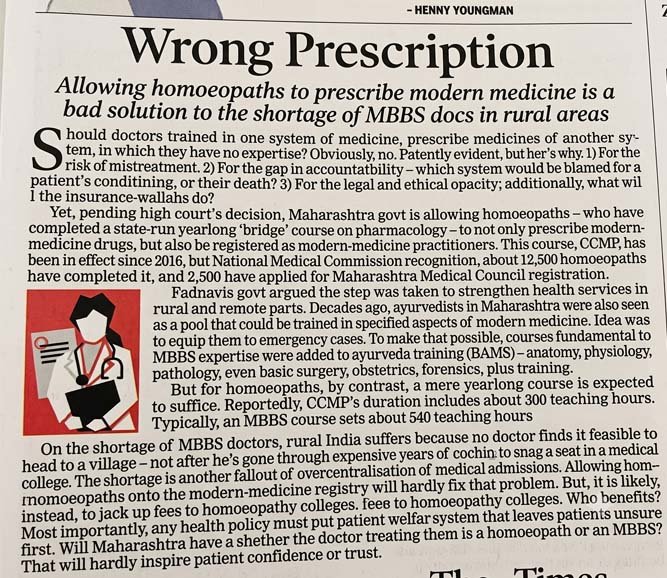

In an attempt to bridge the urban-rural healthcare divide, the Maharashtra government passed a policy allowing homoeopathic practitioners—upon completing a one-year Certificate Course in Modern Pharmacology (CCMP)—to prescribe select modern allopathic medicines. While framed by state authorities as a pragmatic solution to a shortage of MBBS doctors in primary health centres, the policy flies in the face of established medical protocols regarding scope of practice, cross-prescription, and patient safety.
An analysis of treatment protocols in India, the United States, and Europe reveals a universal truth: prescriptive authority is inextricably tied to the depth and rigour of medical education, not the completion of a supplementary bridge program.
The Indian Jurisprudential and Legislative Context