

The economic footprint of a truly historic pharmaceutical blockbuster extends far beyond corporate balance sheets; it acts as a sovereign macroeconomic engine. When a single molecule commands billions in annual global trade, it reshapes the economic architecture of its home nation. In countries like Denmark, the meteoric expansion of Novo Nordisk's metabolic portfolio has fundamentally altered national GDP growth, driven employment, and forced central banks to manage unique currency dynamics. From Switzerland's multi-generational reliance on Basel’s life-science exports to the massive corporate tax contributions and high-value manufacturing ecosystems that anchor the United States, Germany, and Japan, these twenty-five flagship products serve as vital strategic assets. They draw in immense global capital, directly financing national research infrastructures and solidifying their home countries' positions in the global knowledge economy. and solidifying their home countries' positions in the global knowledge economy.

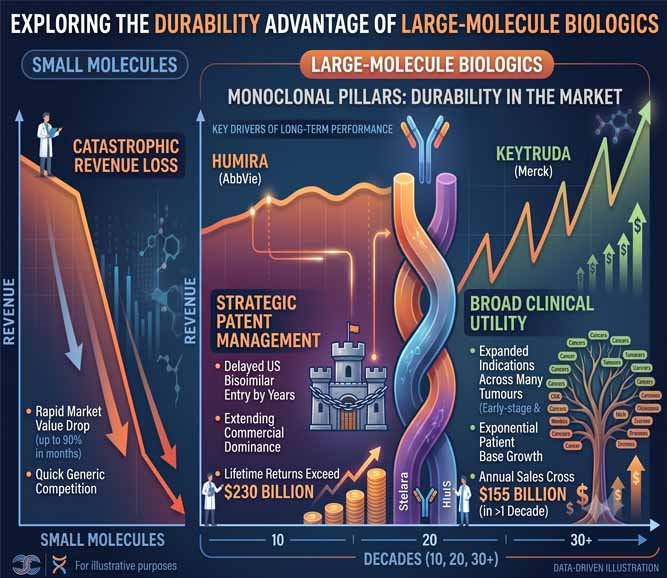
In the pharmaceutical business, Research & Development (R&D) is a high-stakes calculus. Companies invest billions of dollars annually in clinical pipelines, yet the stark statistical reality is that the vast majority of molecules will fail before reaching commercialisation. Yet, when an asset successfully navigates clinical endpoints and captures global medical consensus, it achieves a distinct clinical and economic status—the blockbuster (traditionally defined as generating over $1 billion in annual revenue).