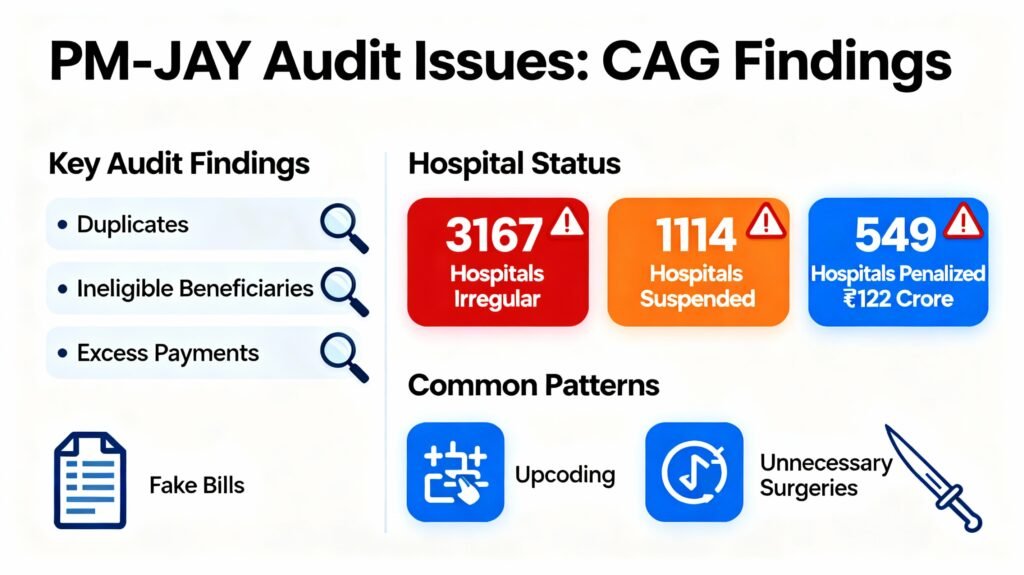




PM-JAY is already attracting systematic fraud and abuse, and unless safeguards keep pace with expansion, it risks becoming a prime “low‑hanging fruit” for unethical providers after retail health insurance.[1][2][3]
From retail insurance fraud to PM-JAY abuse
- In the retail and group insurance market, familiar fraud patterns include inflated bills, unnecessary procedures, fake claims, and collusion between hospitals, patients, and intermediaries.[4][5][6]
- PM-JAY replicates many of the same structural incentives—third‑party payment, information asymmetry, weak regulation of private hospitals—but on a much larger, government‑funded platform with politically driven enrollment and spending targets.[2][5][1]
- The combination of high volumes, standardized package rates, and a poor, less‑empowered beneficiary base makes PM-JAY particularly attractive for organized fraud compared with traditional health insurance, where insurers have more mature fraud‑detection systems.[5][1][4]
Evidence that PM-JAY is being targeted