

Strategy and strategic planning are perhaps the most hyped-up words in business. One approaches strategy, as if entering the sanctum sanctorum of business management, thanks to business gurus and management consultancies that sell permutations and combinations of the same strategies to as many companies as their business development team manages to hook.
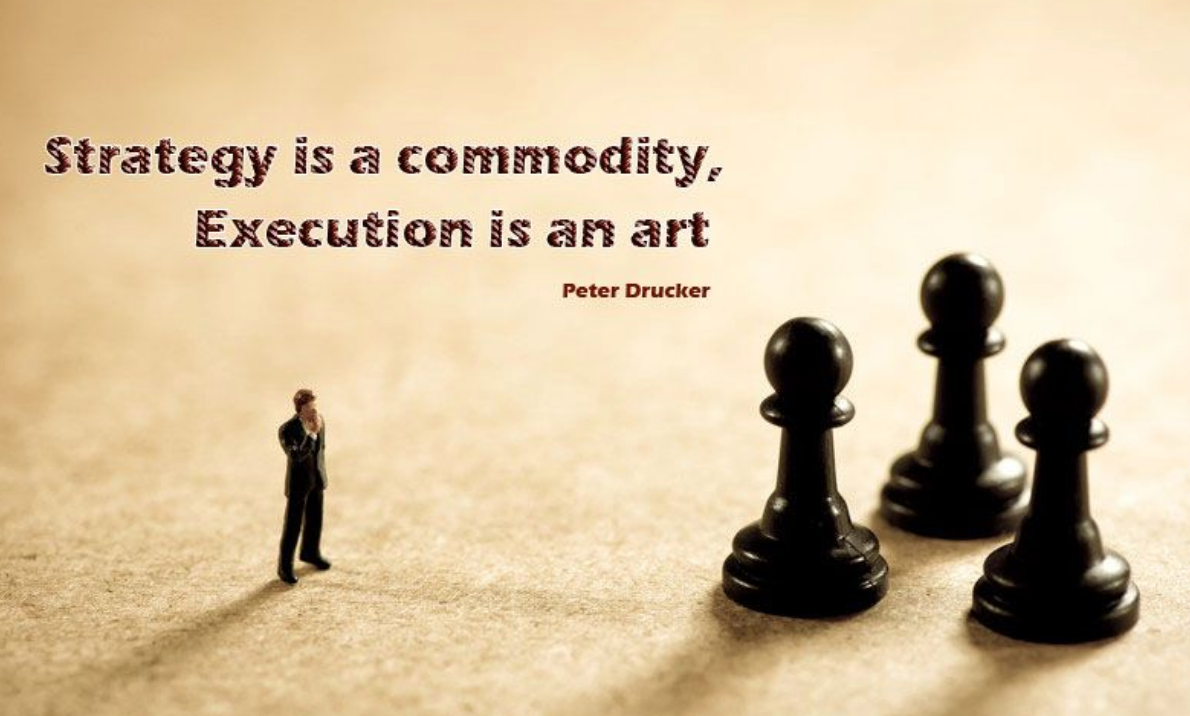
This lesser known quote on strategy by Peter Drucker, made me delve into the topic a bit. While many business gurus have given different versions, I liked the simpler and saner version by Srinivas Khandula, a delightful speaker, who I chanced upon and listened to, at an NHRD event on human resource management.
According to Khandula, strategy is, “Anything you want to do in a particular way.” Khandula further elaborates saying, “Most companies tend to relook their strategies when things don’t work as envisaged, instead of critically assessing the execution culture of their organisation.”
Execution is an art because it involves people and often hundreds and thousands of people as in pharma companies, where the Field Force is doing the same thing day in and day out. What matters is, “How well are they executing?” Is there some coherence in their everyday actions across the country as well as scope for variations to suit local market conditions and individual strengths? Are front-line managers able to nurture and build a culture of excellence? How much does the company invest in the learning and development of front-line managers? Are the front-line managers able to manage business, lead people and build relationship with customers?
Mankind Pharma is a great example of “strategy is a commodity but execution is an art” because they have taken a mundane strategy of low priced drugs and created a culture where people are valued for their inherent strengths.
And what an art they have made out of it.