

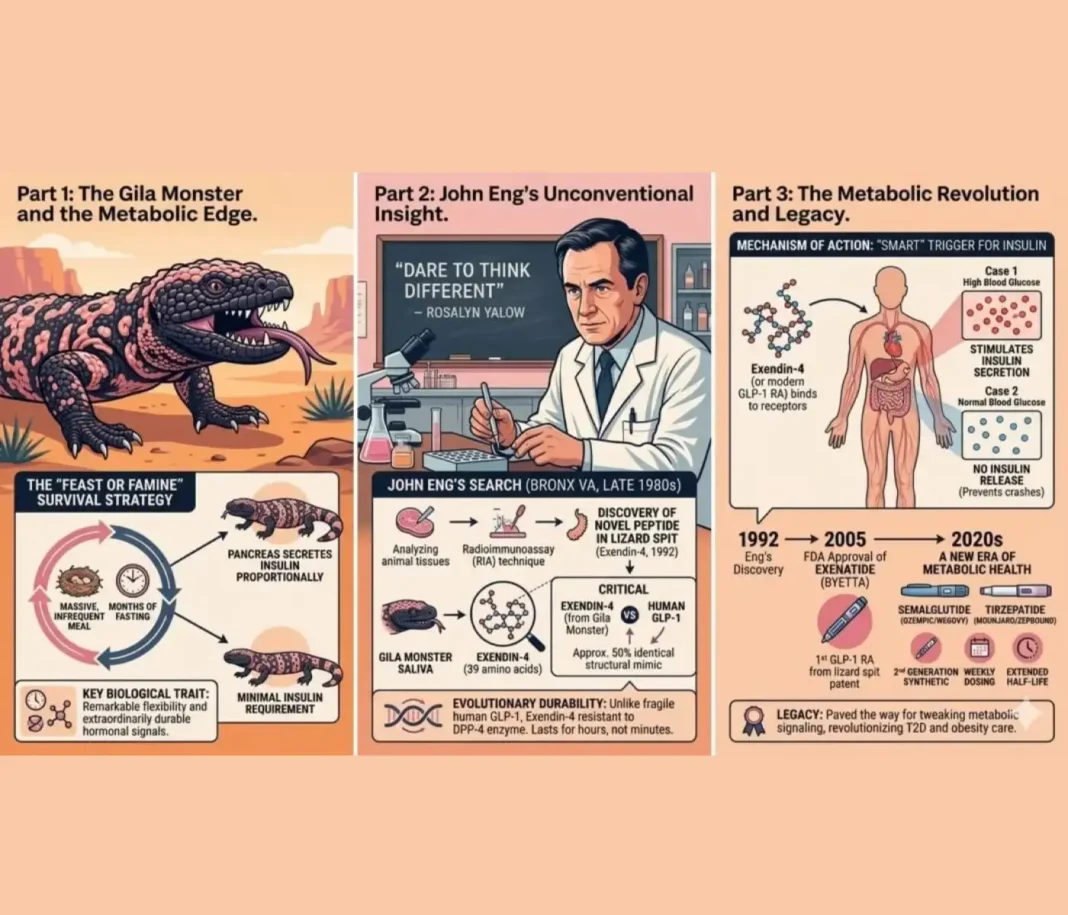

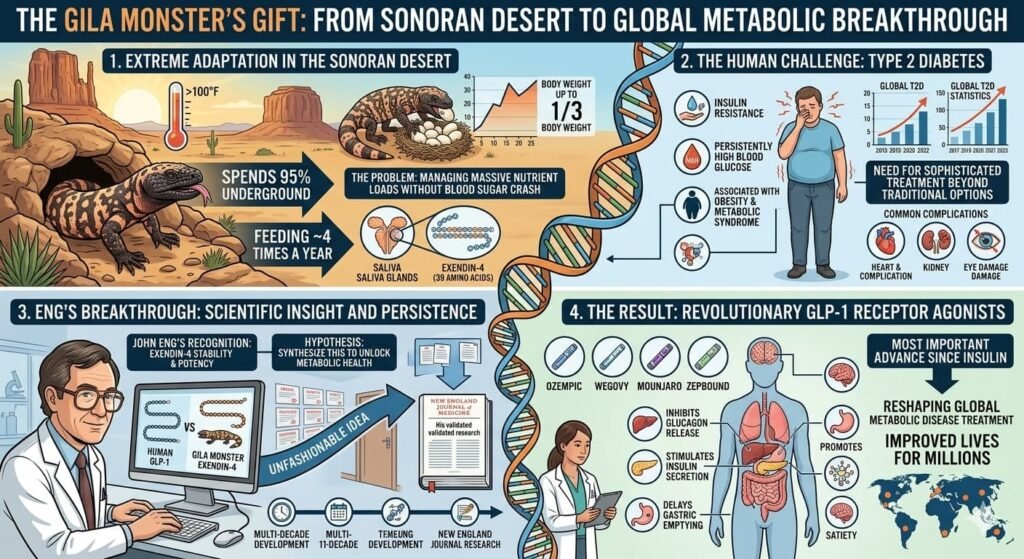
In the blistering Sonoran Desert, where temperatures regularly exceed 100 degrees Fahrenheit, a sluggish, beaded lizard emerges from its burrow perhaps four times a year to feed. The Gila monster (Heloderma suspectum) spends 95% of its life underground, surviving on massive seasonal feasts during which it consumes up to a third of its body weight in a single sitting. This extreme lifestyle—prolonged fasting punctuated by gluttony—required the evolution of a metabolic adaptation of genius-level sophistication: the ability to process enormous nutrient loads without crashing blood sugar systems.
What the Gila monster evolved over millions of years, a persistent New York endocrinologist named John Eng recognized in the 1980s as a potential key to unlocking one of medicine's most persistent challenges: type 2 diabetes. The result of his insight would eventually reshape the treatment of metabolic disease worldwide, leading to a class of drugs that now includes Ozempic, Wegovy, Mounjaro, and Zepbound—medications that have been called the most important advance in metabolic health since insulin itself.