


After settling down comfortably into my seat on a flight from Chicago to San Francisco, I started browsing through my digital copy of the latest issue of The Economist. Much to my surprise, I saw an article titled, The Usefulness of Managers beginning with the sentence, "Is your manager really necessary?"
Bingo!!! My mind went back to so many discussions we keep having about our Indian Pharma industry and the various arguments about line management and their contributions, role clarity, their usefulness and the often-asked question, “Are they really effective?”
When the top leadership says, that effective managers are a rare breed with comments such as, “they are the weakest link in our chain”, my mind keeps racing through with the thought as to, “if they are not, who has to be responsible to make them effective?”
Having been a line manager and climbing the ladder against odds, I can understand and empathise with both sides of this management world.
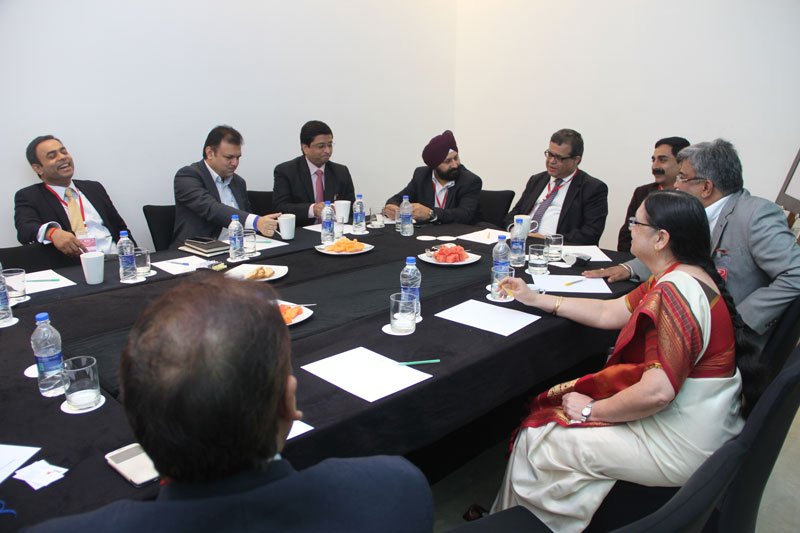
However, when these doubts and questions keep raising its head often, my curiosity quotient kept raising a question, “Are we in Indian pharma very unique to have such challenges?” A chance meeting I had with a team of Google senior management personnel based in Google’s headquarters in California during this trip gave me an interesting insight on what Google did and what it continues to do.
Much to my solace I found that their apprehensions were similar to what we in Indian Pharma face. The differentiating factor was that their "people operations" team (HR) has applied the Google Way (data analytics) to management analysis and developed a manifesto entitled Eight Habits of Highly Effective Google Managers.
Lower prices, discounts, convenience of ordering and home delivery are some of the benefits for consumers with e-pharmacies. The anonymity of the internet encourages patients to seek information about medicines that they would otherwise avoid. Mental health is one area where the consumers wish to maintain confidentiality and opt for online consultation and medication.
The Indian Pharmaceutical Market (IPM) was valued atRs. 10,025 crores in the month of July 2016 clocking a 14.7% growth over same period last year (SPLY). This was the first time ever the market crossed the 10,000 crore mark in a single month.
The pill is now a commodity that many of these companies provide at heavy discounts, making money off everything ‘beyond the pill’. Investors are betting heavily on the potential of technological innovation to transform the way healthcare is delivered.
The Economic Times reported that in 2021, India recorded investments of $77 billion across 1,266 deals including 164 large deals worth $58 billion. While the money reduced in 2022, the reason wasn’t a lack of faith in this business model.
Meanwhile, the pharmaceuticals industry that is most affected by this quiet but rapid change, is grappling with its entrenched culture. Its current business is so profitable that everything else pales in comparison.
‘Build, measure, learn, build again’ – a mantra of the health tech industry is alien to pharma that doesn’t learn, build or measure after launching a product.
Pharma also thinks of its customers as doctors alone and does precious little to connect with patients, or caregivers. People who are not sick do not feature on their radar at all. These are cultural values that keep pharma focused on the pill and discourage thinking beyond it.
A social media poll conducted by MedicinMan showed almost predictable responses. 100+ respondents who work in the pharma industry in India were quite clearly divided. 48% of them wanted to know what beyond the pill actually meant, while 23% wanted to know how to execute it.
The rest felt that the ultra-competitive environment in the Indian generics market required very high share-of-voice tactics (19%), or that their customers demanded product information (9%).
“If we look at major trends, people are living longer, on average, so there’s a rise in chronic diseases associated with aging. Meanwhile, healthcare workers are in short supply, and physicians and nurses do not have enough time for patients. Yet everyone has powerful computers in their pockets that give them access to technology, education, and information. Put all that together, and it’s the perfect moment for digital solutions to come to the market, change behavior, and enhance health outcomes at scale”
- Bozidar Jovicevic, Global head of Digital Therapeutics, Sanofi