
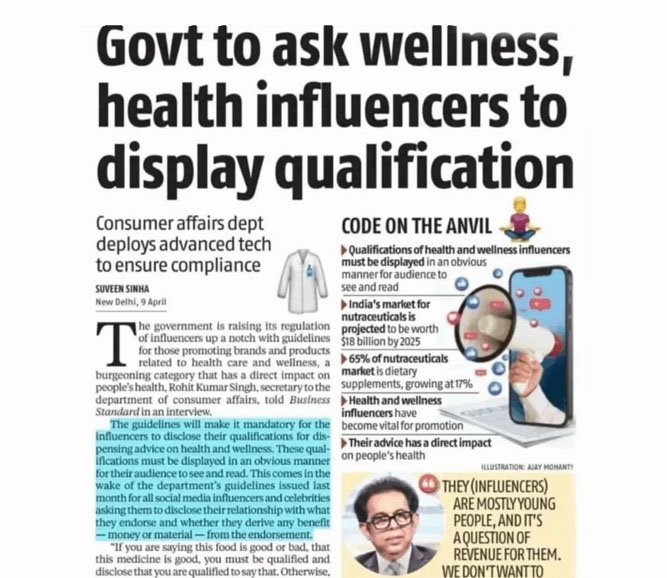

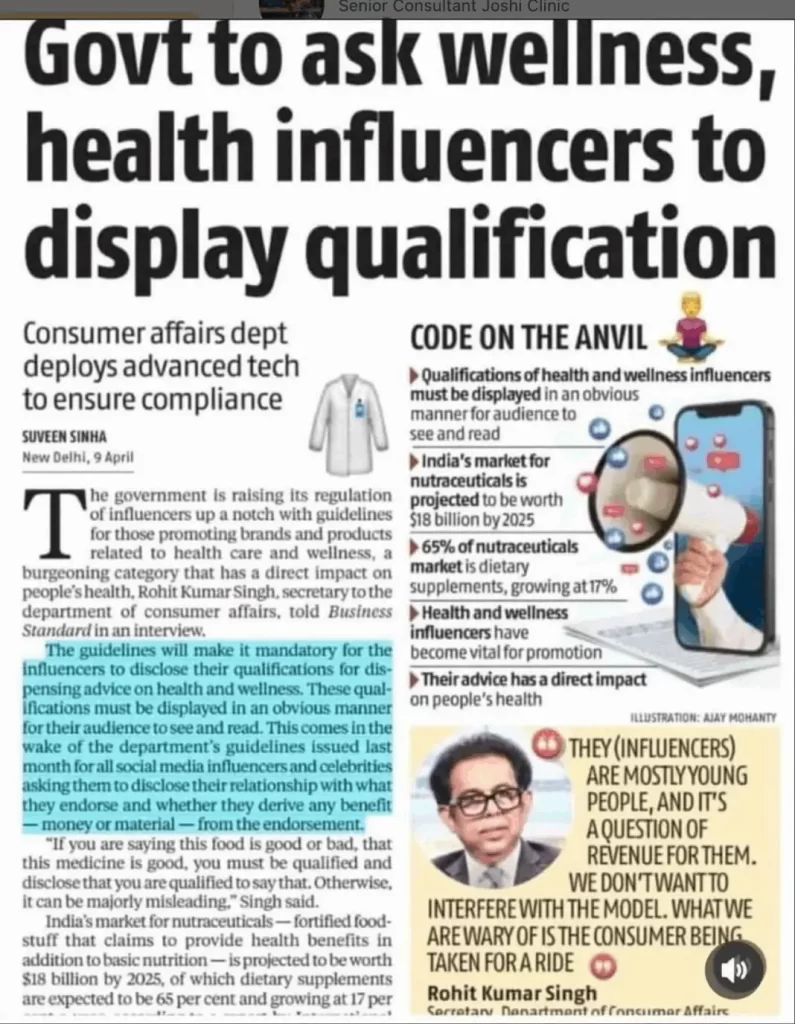
India’s wellness economy is booming—nutraceuticals, supplements, and alternative therapies are projected to touch $18 billion by 2025. Alongside, health and wellness influencers have emerged as powerful promoters, shaping consumer decisions daily. But with influence comes responsibility, and now, regulation.
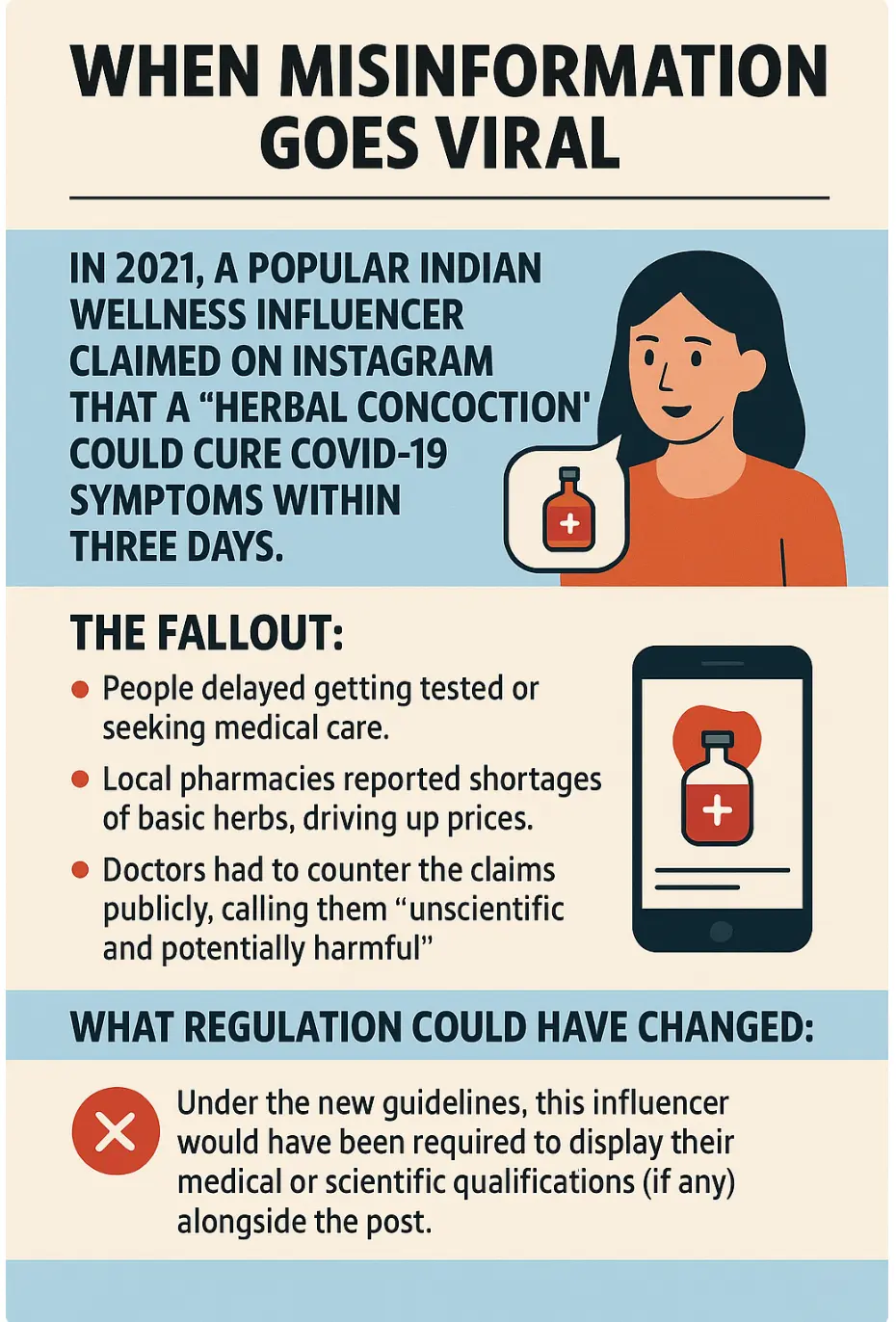
The Department of Consumer Affairs has signaled a significant shift: health and wellness influencers will be required to display their qualifications before dispensing advice. In practice, this means that a self-styled diet coach or “biohacking” guru will need to show proof of expertise if they claim a product lowers cholesterol, boosts immunity, or aids weight loss.
Why This Matters
1. Consumer Protection First
Health advice is not entertainment—it carries real risks. Misinformation in this space can lead to poor lifestyle choices, delayed treatment, or adverse reactions. By mandating disclosure, the government is safeguarding the consumer from being misled.
2. Professionalizing the Influencer Economy
India’s influencer market thrives on trust. But unlike fashion or travel content, health cannot rely on charisma alone. Displaying credentials creates a trust-but-verify ecosystem, where genuine experts rise above noise.
3. Aligning with Global Trends
Regulators worldwide are scrutinizing influencer marketing. The ASCI (Advertising Standards Council of India) has already tightened norms, requiring qualified credentials for advice in health and finance. The government’s move signals greater alignment with global best practices.
The Bigger Picture for Pharma and Healthcare Brands
For pharma marketers, this development is not just compliance—it’s an opportunity:
• Elevate Credible Voices: Partner with medical professionals, certified nutritionists, or patient advocates whose qualifications build natural trust.
• Transparency as Differentiator: Brands that insist on credential display will stand out as ethical, responsible, and consumer-first.
• Combat Misinformation: With the wellness space saturated with half-truths and quick fixes, this framework helps pharma reclaim leadership in evidence-based narratives.
Caveats and Challenges
• Blurred Lines: What counts as “advice”? Sharing a smoothie recipe vs. prescribing it for diabetes management are two very different things, but not always easy to distinguish.
• Creator Pushback: Influencers, many of them young and non-certified, may argue that regulation stifles creativity.
• Implementation: Tech-driven compliance monitoring will be crucial to scale enforcement across platforms.
MedicinMan’s Take
This is not about silencing voices—it’s about raising the bar for trust. Influencers will still thrive, but the ones who bring real expertise to the table will now have a stronger competitive edge. For healthcare brands, the lesson is clear: go beyond visibility, invest in credibility.
In a market where “wellness” often blurs with “wishful thinking,” regulation is not just a hurdle—it’s a strategic reset.
The message from regulators is simple: health advice should come with credentials, not just charisma.

Thanks to Dr. Shashank Joshi for sharing this news on LinkedIn and to Shakul Srivastava, Vice President, Indian Immunologicals Ltd for alerting me