


Why Indian hospitals must go beyond treatment to build a global patient experience
The Surge in Medical Tourism
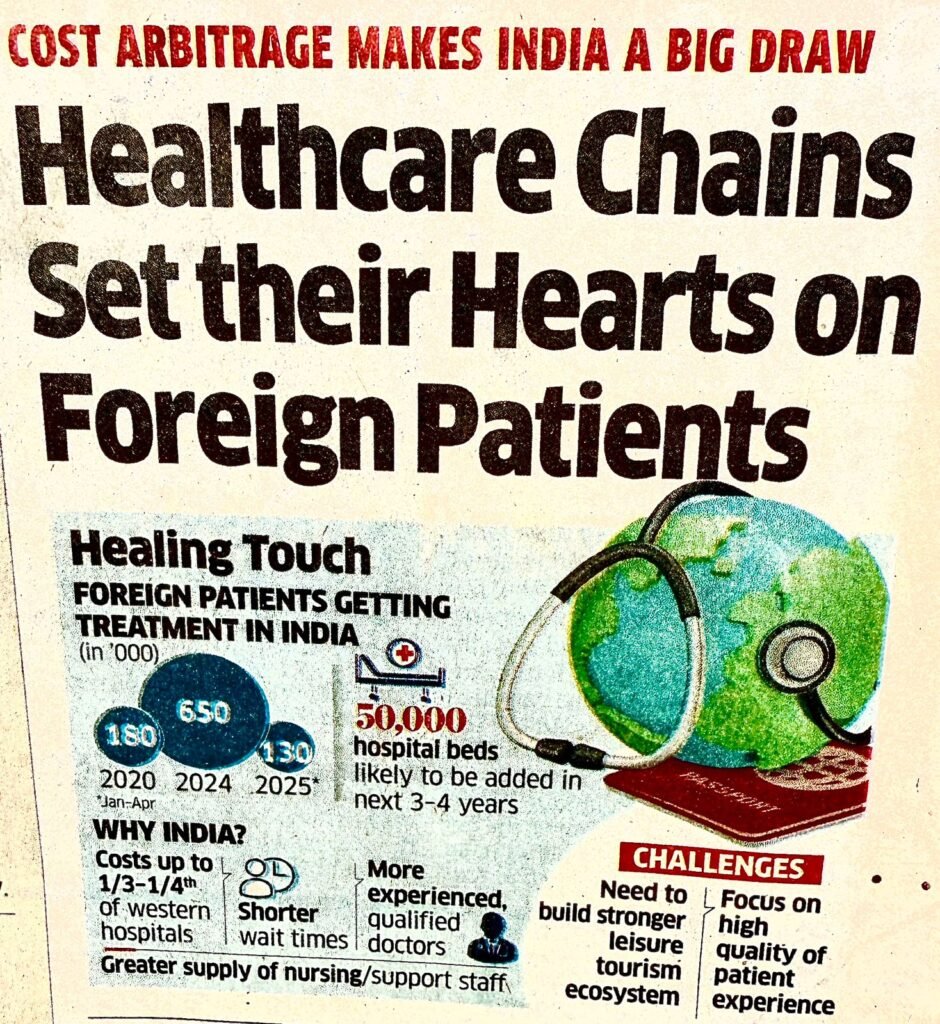
India’s hospitals are witnessing a surge of international patients. From 180,000 in 2020 to 650,000 in 2024, medical tourism is no longer a side-show — it’s a fast-growing industry. Even in just the first four months of 2025, India has already treated 130,000 foreign patients. The trajectory is clear: India is becoming a healthcare destination of choice.
At the same time, 50,000 new hospital beds are slated to be added across the country in the next 3–4 years. This is not just about serving India’s growing population — it’s about preparing for global inflows.
Why India Wins Today
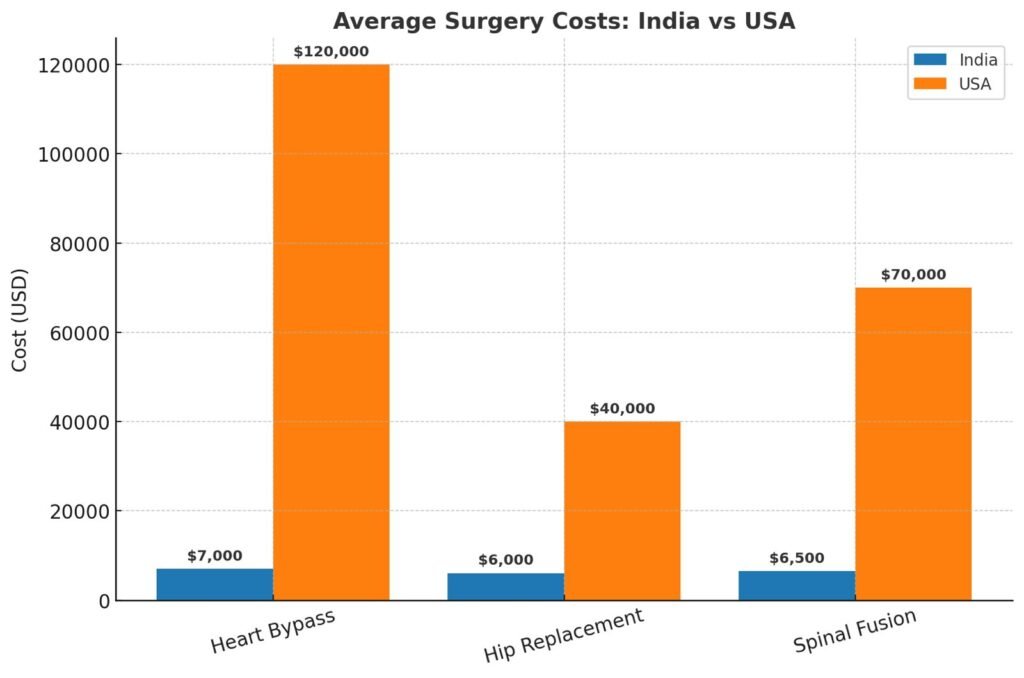
• Cost advantage: Surgeries in India cost a third or even a fourth of what patients pay in the West.
• Minimal wait times: Patients who face months of delay abroad get faster access here.
• Clinical expertise: Indian doctors bring international training, higher case volumes, and deep specialization.
• Nursing strength: An abundant and skilled support workforce ensures round-the-clock care.
On paper, the value proposition is unbeatable. But here’s the catch: low cost alone is not a sustainable differentiator.
The Experience Gap
When patients fly to Thailand or Singapore, they don’t just get treatment — they get an ecosystem. Five-star recovery suites, medical concierges, multilingual support, wellness resorts, tourism tie-ins — the whole package.
India, despite its clinical strengths, has not yet fully cracked this. Too often, international patients land in hospitals that feel transactional, not transformative. The “India brand” in healthcare risks being trapped in the low-cost box, unless the industry reinvents its playbook.
The Way Forward: From Treatment to Experience
If India wants to lead the global medical tourism race, hospitals must think beyond surgeries and start curating end-to-end journeys:
1. Build medical tourism clusters — hospitals, recovery resorts, wellness spas, and cultural tourism bundled together.
2. Hospitality partnerships — tie-ups with airlines, luxury hotels, and tour operators to create “surgery + recovery + leisure” packages.
3. Digital-first experience — pre-consultations, visa facilitation, remote follow-ups, and AI-enabled multilingual support.
4. Global quality benchmarks — transparent pricing, JCI/NABH accreditations, and five-star patient experience as the new baseline.

The Call to Action
India has already won the cost battle. The next war is for trust, experience, and global mindshare.
The question for Indian healthcare chains is simple:
👉 Do we want to remain the “affordable alternative”, or do we want to become a premium global brand in healthcare?
The answer will determine whether India can truly unlock its most strategic export yet — healing with hospitality.