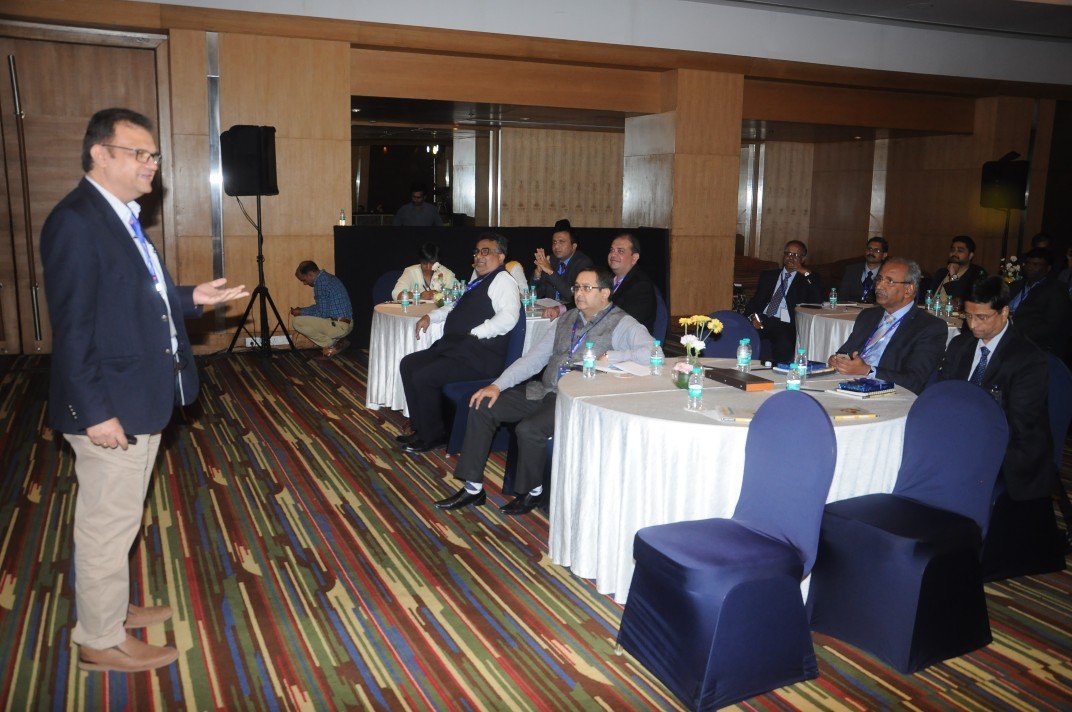




In the organisational context, LEADERSHIP appears more glamorous than the word MANAGEMENT. When it comes to a team whether small or large, we need to realise that the first requirement is to be an effective manager and then a leader.
Why so?
First and foremost, Managers are responsible for making sure that things are done properly. And while leaders may bring us vision, inspiration and challenge, these things count for nothing without the efficient implementation brought about by good management.
To be a great manager, you must have an extensive set of skills, both hard and soft – from planning and delegation to communication and motivation.
The skill set is so wide, and hence, for your long-term success, it's wise to analyse your skills in all areas of management – and then to challenge yourself to improve in all of these areas.
So, a fundamental question that is unasked, but lingers in the mind often is, Are managers really necessary?
The pill is now a commodity that many of these companies provide at heavy discounts, making money off everything ‘beyond the pill’. Investors are betting heavily on the potential of technological innovation to transform the way healthcare is delivered.
The Economic Times reported that in 2021, India recorded investments of $77 billion across 1,266 deals including 164 large deals worth $58 billion. While the money reduced in 2022, the reason wasn’t a lack of faith in this business model.
Meanwhile, the pharmaceuticals industry that is most affected by this quiet but rapid change, is grappling with its entrenched culture. Its current business is so profitable that everything else pales in comparison.
‘Build, measure, learn, build again’ – a mantra of the health tech industry is alien to pharma that doesn’t learn, build or measure after launching a product.
Pharma also thinks of its customers as doctors alone and does precious little to connect with patients, or caregivers. People who are not sick do not feature on their radar at all. These are cultural values that keep pharma focused on the pill and discourage thinking beyond it.
A social media poll conducted by MedicinMan showed almost predictable responses. 100+ respondents who work in the pharma industry in India were quite clearly divided. 48% of them wanted to know what beyond the pill actually meant, while 23% wanted to know how to execute it.
The rest felt that the ultra-competitive environment in the Indian generics market required very high share-of-voice tactics (19%), or that their customers demanded product information (9%).
In a World Economic Forum talk, Professor Sumantra Ghosal - the founding Dean of the Indian School of Business, Hyderabad - talked about the "Smell of the Workplace" as a metaphor to describe the need for creating a new context that enables employees to change their mindset from that of Constraint, Compliance, Control and Contract to that of Stretch, Discipline, Trust and Support.