

A MedicinMan Editorial based on the Poll framed by Deep Bhandari on LinkedIn and WhatsApp
https://www.linkedin.com/feed/update/urn:li:activity:7436442645914316800
Every few years the pharmaceutical industry returns to a familiar question: Are we training Medical Representatives well enough?
A recent MedicinMan poll suggests the answer—at least from those closest to the field—is a decisive no. An overwhelming 84% of respondents believe current training programs are inadequate. At first glance, this appears to be a learning-and-development problem. It will likely trigger the usual response cycle: revised training modules, new digital learning tools, and renewed emphasis on capability building. But this interpretation misses the deeper issue. The pharmaceutical industry does not primarily have a training problem. It has a role-definition problem.
The pharmaceutical industry does not primarily have a training problem
It has a role-definition problem
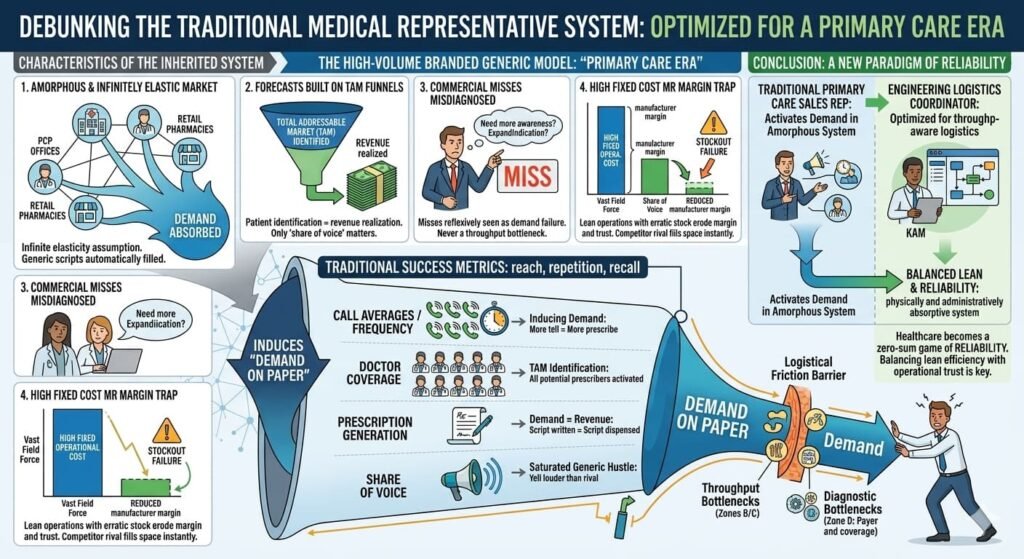
The System the MR Was Built For: Medical Representative has been the backbone of pharmaceutical commercialization. The role evolved within a commercial environment driven largely by high-volume branded generics. Within that model, success was defined by familiar operational metrics:
- call averages
- doctor coverage
- visit frequency
- prescription generation
These metrics rewarded reach, repetition, and brand recall. And for many years, they worked.
However, the industry today increasingly speaks a different language. In leadership meetings and conference presentations, the conversation now revolves around:
- scientific engagement
- therapy-area expertise
- patient pathway understanding
- consultative interaction with healthcare professionals
The aspiration is clear: Medical Representatives are expected to function less as brand messengers and more as informed partners in therapeutic discussions. Yet the system in which they operate has changed very little. Organizations continue to evaluate field performance largely through the same metrics that shaped the role three decades ago.
No training program can reconcile that contradiction.
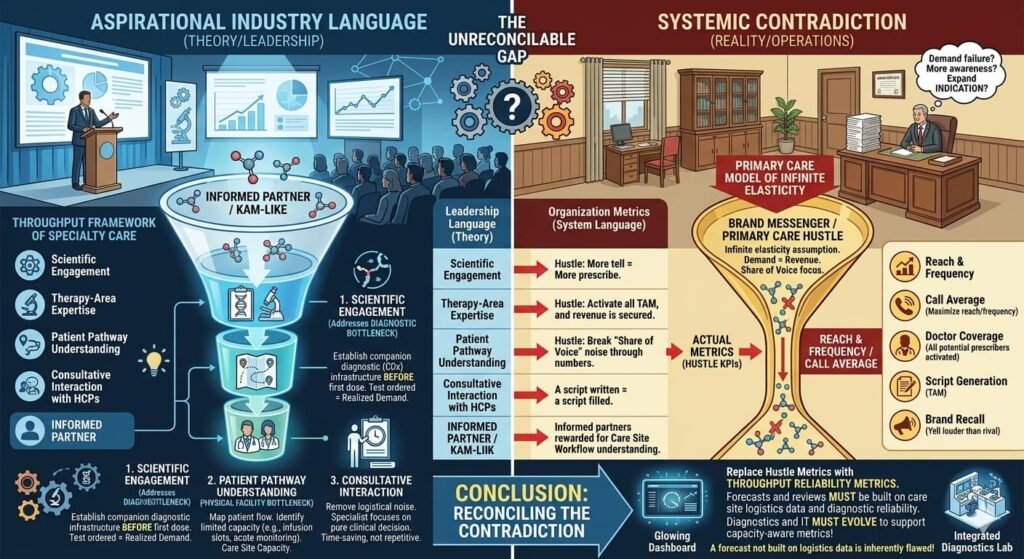
Organizations continue to evaluate field performance largely through the same metrics that shaped the role three decades ago
No training program can reconcile that contradiction
The Mass-Market Anchor
The second MedicinMan poll offers an important explanation for why this contradiction persists.
Many respondents believe the MR role has not evolved significantly because the industry remains structurally dependent on mass-market commercial models.Large portions of pharmaceutical revenue—particularly in emerging markets—continue to come from extensive doctor coverage and high prescription volumes for branded generics.
Within such an ecosystem: Speed of coverage matters more than depth of engagement. Brand recall often outweighs clinical differentiation. Operational efficiency becomes more valuable than scientific dialogue. As long as this model remains commercially successful, the incentive to redesign the field-force architecture remains limited.
This creates a curious paradox: At the strategic level, the industry increasingly embraces the language of transformation—digital platforms, omnichannel engagement, artificial intelligence, and data-driven customer insights. But in the day-to-day reality of the field force, the operating model remains remarkably familiar.

The Specialty Inflection Point
Despite this inertia, the poll results also point toward an emerging shift. The largest group of respondents believes that super-specialty drugs and complex biologics will inevitably demand a more capable and scientifically credible field force. This expectation is difficult to dispute. Physicians managing advanced therapies do not merely seek brand reminders. They require informed conversations around clinical evidence, patient selection, treatment pathways, and long-term outcomes.
Such engagement demands a very different type of field professional. Yet the survey responses suggest that fewer than 10% of companies have meaningfully adapted their field-force strategy in anticipation of this shift. Many appear to be waiting for complex portfolios to arrive before investing in capability. Strategically, that approach is risky. Capabilities require time to build, and credibility with physicians cannot be established overnight.
Perhaps the most revealing insight from the surveys is the near absence of optimism
In the second poll, only one respondent believed that the Medical Representative role has kept pace with industry change
The Leadership–Field Reality Gap
Perhaps the most revealing insight from the surveys is the near absence of optimism. In the second poll, only one respondent believed that the Medical Representative role has kept pace with industry change.
That number should give the industry pause. It points to a growing gap between leadership narratives and field experience. While strategic conversations increasingly highlight innovation and transformation, many Medical Representatives continue to operate within systems defined by rigid call targets, repetitive detailing, and administrative reporting structures. The field force senses the disconnect.

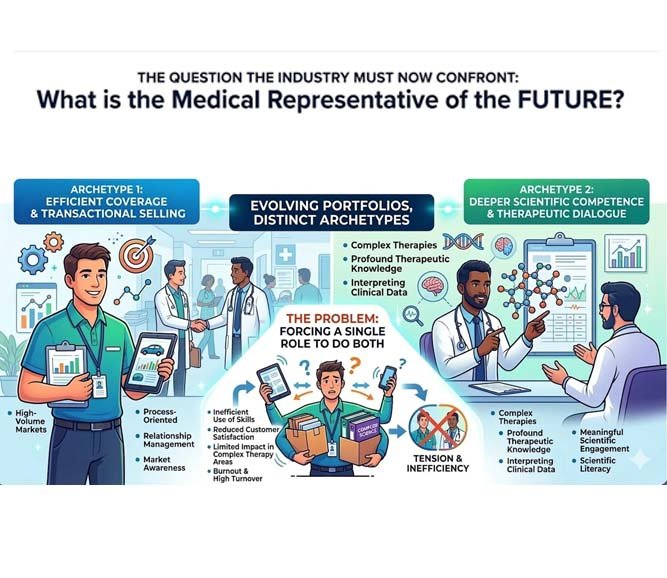
The Question the Industry Must Now Confront
The conversation therefore needs to move beyond the familiar question: “How do we train Medical Representatives better?”
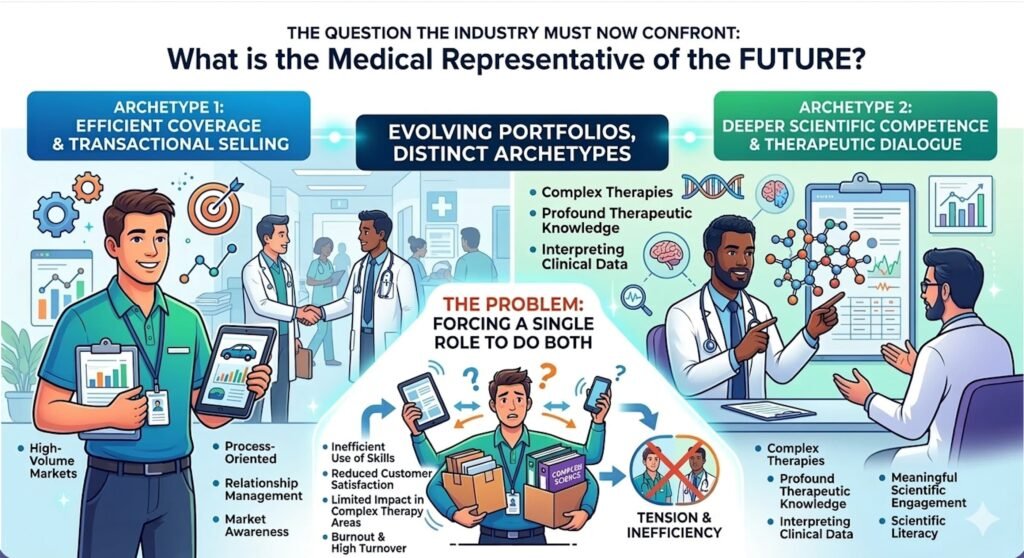
The more fundamental question is this: “What exactly is the Medical Representative meant to be in the future?”
As pharmaceutical portfolios evolve, the industry appears to be moving toward two distinct archetypes of field professional. The first remains focused on efficient coverage and transactional selling within high-volume markets. The second requires deeper scientific competence and the ability to engage physicians in meaningful therapeutic dialogue around complex therapies. Attempting to force a single role to fulfill both functions may explain much of the tension currently experienced across the field force.
The Hidden Risk
The Medical Representative is not becoming obsolete. But the role is becoming strategically undefined.
And that ambiguity carries consequences. If the industry fails to clearly redefine the future of the field force—and align incentives, metrics, and training accordingly—it risks creating a widening gap between what the market increasingly demands and what the commercial model continues to deliver. In such an environment, the most capable field professionals will begin to seek roles that allow them to operate at a higher level of engagement and professional relevance.
The quiet crisis in the field force is therefore not simply about capability. It is about clarity of purpose. The 84% who question current training are not resisting change. They are signaling something deeper: The pharmaceutical industry has not yet fully decided what the Medical Representative of the future should be.
The pharmaceutical industry has not yet fully decided what the Medical Representative of the future should be
Poll Footnote: Total respondents across both surveys: 114
A Step Toward Understanding – To bring clarity to this issue, MedicinMan, in partnership with SlamDunk, has launched the Future-Ready Super MR: Industry Capability, Engagement & Career Outlook Survey 2026
The goal is simple: to listen to the voices of Medical Representatives themselves
If you are a Medical Representative—or work closely with field teams—your insights will help build one of the most meaningful industry snapshots of the MR profession today
The survey takes about 10 minutes.
Everyone who completes the survey will receive the final report free.
Take the survey here: https://forms.gle/wfg5YucnYc64qk4x9
Your participation will help the industry better understand the real challenges, aspirations, and future of Medical Representatives.