


Does This Public-Private Partnership Benefit The Public?” (Tuesday, July 8, 2025)
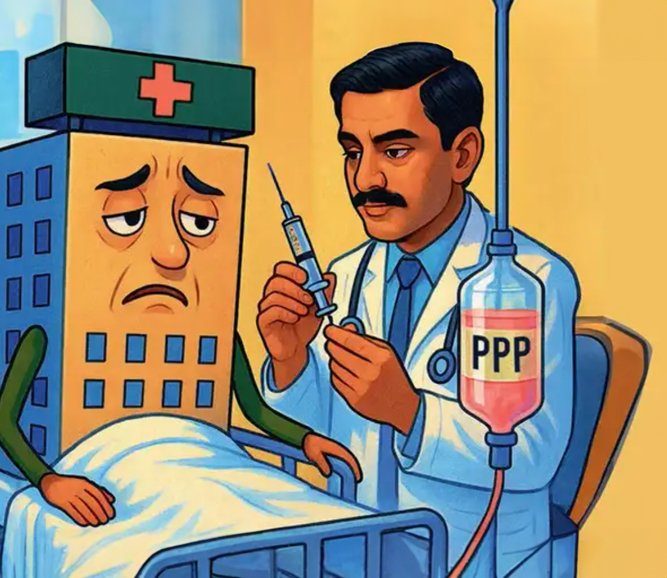
Many Indian states, following a Government of India initiative, have handed over public hospitals to private companies under Public-Private Partnership (PPP) models. These reforms aim to improve healthcare quality for low-income patients and reduce government expenditure. However, the article finds that in many cases, neither goal is reliably achieved.
Instead, PPPs risk increasing medical costs, creating access barriers for the poor, and potentially eroding the core principle of universal, free healthcare in government hospitals.
Key Points
✅ Rationale Behind PPPs
• Government hospitals often lack resources, staff, and infrastructure.
• PPPs aim to leverage private expertise and efficiency to improve services without increasing government spending.
• GOI set a target for 50% of hospital beds to be under PPPs.
✅ Concerns Highlighted
• Past PPP models have failed in several Indian states due to higher patient costs and reduced access for poor patients.
• Medical inflation in India (12–14%, highest in Asia) makes PPP healthcare risky for the poor.
• When private players take over public hospitals, free treatment can be replaced by insurance-based or fee-based models, leading to repeated costs for citizens who already funded hospitals via taxes.
✅ Numbers & Data
• Per capita expenditure on health in India remains low.
• Government expenditure on health in 2020-21 was ₹1,815 per person, while private expenditure was ₹4,025 per person, reflecting the burden on households.
• Private sector controls 62% of hospital beds but serves only 52% of hospitalised cases.
• PPP hospitals may prioritise profit over universal access.
✅ Impact on Medical Education
• PPP medical colleges charge high fees, reducing affordability and potentially affecting the supply of affordable doctors.
✅ Key Quote from the Article
“With medical inflation at 12–14% — the highest in Asia — India’s push for PPP healthcare could end up hurting those who can least afford it.”
✅ Broader Implication
• The article questions whether PPPs truly serve public interest or primarily benefit private entities, potentially undermining universal healthcare.

A MedicinManAI Feature